The aloe vera plant on my kitchen windowsill has survived my neglect for nearly a decade. It asks for almost nothing—occasional water, indirect light, benign indifference—yet gives generously whenever I slice open a leaf. Burns, scrapes, dry patches: the clear gel inside handles them all with quiet competence. Making soap with this patient succulent felt like finally repaying an old debt.
Incorporating aloe vera into cold process soap requires understanding what happens when plant material meets lye. Fresh aloe gel is mostly water, which means it can replace some or all of the water in your lye solution. However, the natural sugars in aloe can cause the soap to overheat, accelerating the gel phase and sometimes causing cracking. Managing temperature becomes crucial—more so than in water-only recipes.
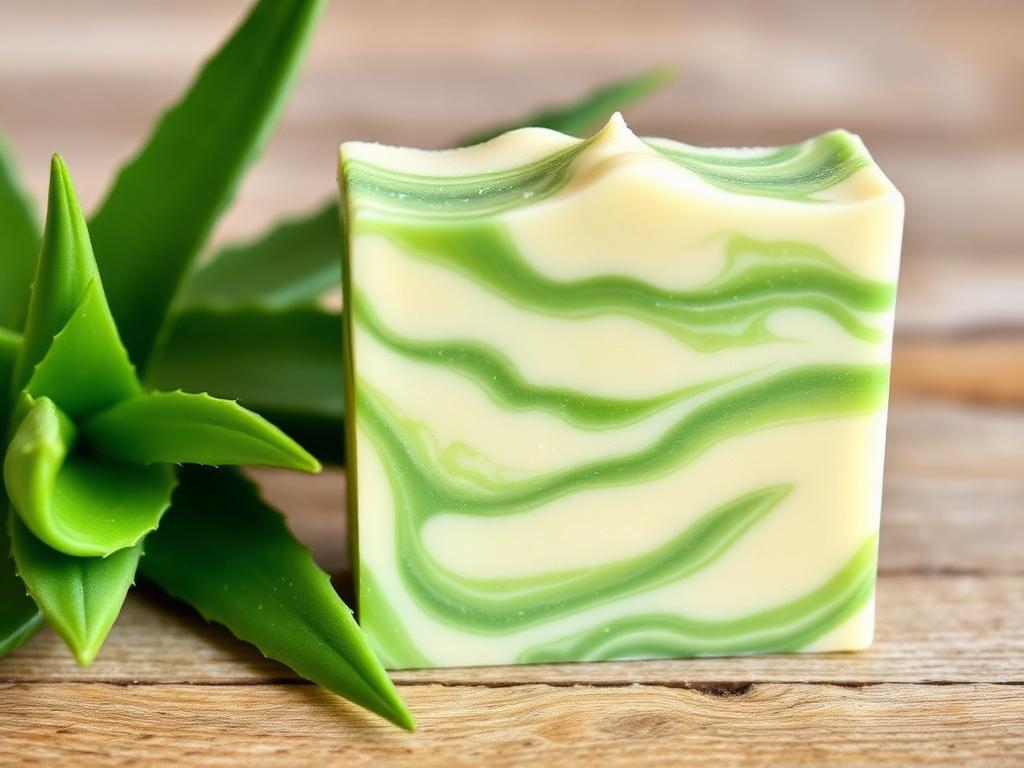
The color transformation delights me every time. Fresh aloe gel appears nearly clear with just a hint of green. As saponification progresses, the color deepens into a soft sage that looks completely natural because it is completely natural. No mica, no dyes—just the chemistry of plant matter reacting with soap. Over the curing weeks, this green may fade slightly toward tan, which some soapmakers find disappointing but I find rather beautiful in its honesty.
I prefer using gel directly from my own plant, though commercial aloe vera gel works if it's pure. Check labels carefully—many "aloe" products contain more water and thickeners than actual aloe. Look for products listing aloe vera as the first ingredient with minimal additives. When using fresh gel, blend it smooth and strain out any fibrous bits that might clog your equipment.
The resulting soap lathers gently with a creamy, low foam—a characteristic inherited from the high olive oil content. This isn't the bubbly experience of coconut-heavy recipes. It's more subtle, more refined, with a slip and glide that feels somehow more expensive than mere bubbles could provide.
Safety Warnings
- MANDATORY: Full safety gear for lye handling
- Aloe sugar content can cause overheating - monitor temperatures
- Work in well-ventilated area
- Freeze aloe gel before adding lye to control heat
Tools Needed
- Safety goggles and chemical-resistant gloves
- Digital scale
- Stick blender
- Thermometer
- Silicone mold
- Blender for aloe gel
Ingredients
Step-by-Step Instructions
Prepare Aloe
Blend fresh aloe gel until smooth. Freeze in ice cube trays. This controls heat when lye is added.
Make Lye Solution
Slowly add lye to frozen aloe cubes, stirring constantly. The heat will melt the cubes.
Combine Oils
Melt coconut oil, combine with olive oil. Wait until both lye solution and oils reach 100°F.
Blend to Trace
Add lye solution to oils, blend to light trace. This recipe may accelerate - work efficiently.
Insulate Carefully
Pour into mold. Do NOT insulate heavily - aloe can cause overheating. Light cover only.
Cure
Unmold after 48 hours. Cure 4-6 weeks before use.
🔧 Common Mistakes & Fixes
📦 Storage Tips
- Cure minimum 4 weeks
- Store in cool, dark place
- Natural color may continue fading with sun exposure
Real DIYer Story
"I insulated my aloe soap like my regular recipes. Came back to find it had overheated, formed a volcano through the insulation, and turned orange-brown. The living room smelled like burnt plant for days."
— Jennifer K.
🔗 References & Further Reading
Independent sources for the chemistry and safety information on this page. We are not affiliated with any of them.
- 1.Soap Making Safety(opens in a new tab)
Handcrafted Soap and Cosmetic Guild
Workspace, storage, and handling practices specific to lye-based soap making.
- 2.Saponification(opens in a new tab)
Wikipedia
The chemical reaction behind every bar of real soap, with reaction equations and history.
- 3.Sodium Hydroxide (CID 14798)(opens in a new tab)
PubChem, National Library of Medicine
Full chemical and hazard profile for lye, including GHS classification and handling data.
- 4.Sodium Hydroxide Poisoning(opens in a new tab)
MedlinePlus, National Institutes of Health
Symptoms and emergency first-aid steps for lye exposure. Worth reading before you open the bottle.
- 5.Personal Protective Equipment — Overview(opens in a new tab)
U.S. Occupational Safety and Health Administration
What eye, hand, and skin protection actually protects against, and how to choose it.
- 6.Poison Help(opens in a new tab)
U.S. Health Resources and Services Administration
Poison control hotline and online help. Keep this reachable while you work.
- 7.Handcrafted Soap and Cosmetic Guild(opens in a new tab)
HSCG
Industry association for handcrafted soap makers, with labeling and regulatory guidance.
- 8.Safer Chemical Ingredients List(opens in a new tab)
U.S. Environmental Protection Agency
EPA-reviewed ingredients grouped by function, useful when substituting additives.