I should confess something: I make avocado soap primarily because I buy too many avocados. We've all been there—purchasing optimistically at the grocery store, envisioning daily avocado toast and guacamole-filled weekends, then finding ourselves with a counter full of rapidly browning fruit. Soap making turned my poor planning into productive crafting.
Fresh avocado adds genuinely beneficial properties to cold process soap. The natural fats complement the saponification process, contributing to a creamy lather and conditioning bar. The flesh contains vitamins and minerals that, while largely transformed during saponification, seem to leave something behind—a richness that plain oil recipes lack.
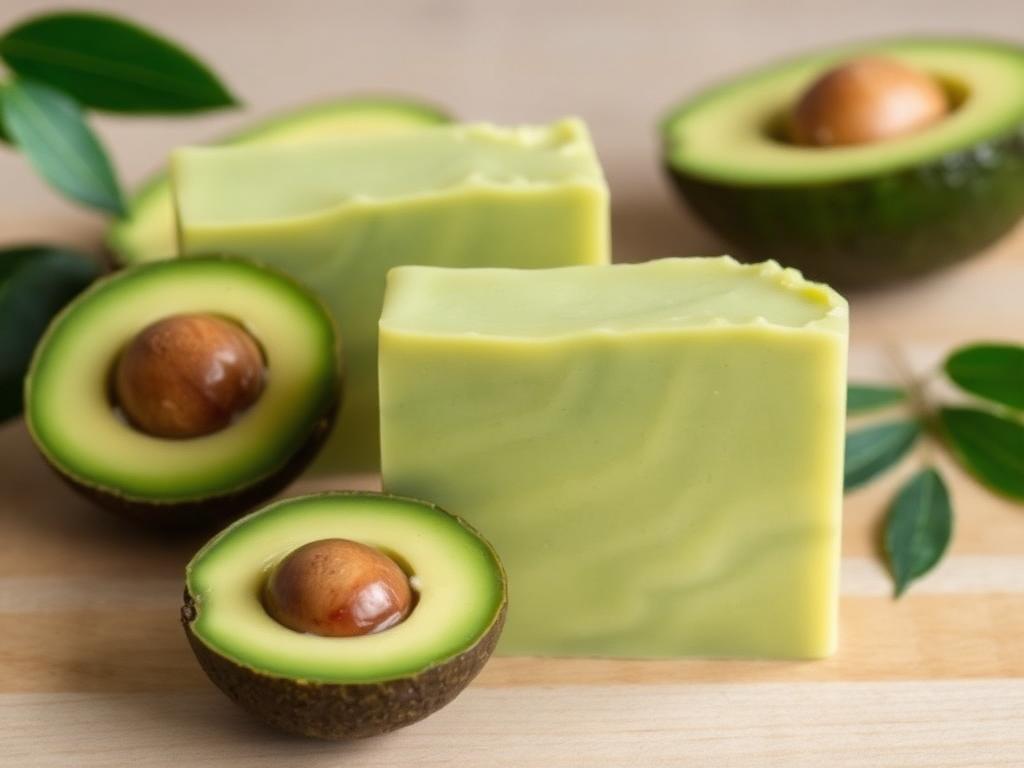
The color situation requires frank discussion. Fresh, ripe avocados are that gorgeous bright green we associate with the fruit. In soap? That green turns brown faster than you can say "oxidation." Many first-time avocado soapmakers find themselves devastated when their beautiful green batter transforms into muddy tan during cure. This is completely normal. The chlorophyll in avocado flesh cannot survive the high pH environment of saponification.
Embracing the natural tan color is part of working with avocado. If you absolutely need green soap, add chlorophyll powder or green mica at trace—but at that point, why not just make a simpler recipe? The beauty of avocado soap lies in accepting what the ingredient gives you, not forcing it into some artificial ideal.
I include avocado oil in the recipe alongside fresh fruit for insurance. Oil won't discolor and provides guaranteed fatty acid content. The fresh avocado becomes almost a bonus—contributing what it can to lather and feel, while the oil carries the technical weight. This belt-and-suspenders approach produces consistent results even when the fresh fruit varies in ripeness.
Safety Warnings
- Full safety gear mandatory for lye handling
- Fresh avocado may cause acceleration - work quickly
- Avocado soap can be prone to DOS (dreaded orange spots) - cure in cool, dark place
- Use truly ripe avocados only
Tools Needed
- Safety goggles and chemical-resistant gloves
- Digital scale
- Stick blender
- Blender for avocado
- Thermometer
- Silicone loaf mold
Ingredients
Step-by-Step Instructions
Prepare Avocado
Remove pit and skin, blend flesh until completely smooth with no lumps.
Make Lye Solution
Add lye to distilled water slowly. Set aside to cool.
Combine Oils
Melt coconut oil, combine with avocado and olive oils.
Add Avocado at Trace
Blend oils and lye to light trace, then add pureed avocado and blend to medium trace.
Pour and Cure
Pour into mold, insulate lightly. Unmold after 48 hours, cure 4-6 weeks.
🔧 Common Mistakes & Fixes
📦 Storage Tips
- Avocado soap has shorter shelf life - use within 6-8 months
- Store in cool, dark place to prevent DOS
- Cure minimum 4 weeks, longer is better
🔗 References & Further Reading
Independent sources for the chemistry and safety information on this page. We are not affiliated with any of them.
- 1.Soap Making Safety(opens in a new tab)
Handcrafted Soap and Cosmetic Guild
Workspace, storage, and handling practices specific to lye-based soap making.
- 2.Saponification(opens in a new tab)
Wikipedia
The chemical reaction behind every bar of real soap, with reaction equations and history.
- 3.Sodium Hydroxide (CID 14798)(opens in a new tab)
PubChem, National Library of Medicine
Full chemical and hazard profile for lye, including GHS classification and handling data.
- 4.Sodium Hydroxide Poisoning(opens in a new tab)
MedlinePlus, National Institutes of Health
Symptoms and emergency first-aid steps for lye exposure. Worth reading before you open the bottle.
- 5.Personal Protective Equipment — Overview(opens in a new tab)
U.S. Occupational Safety and Health Administration
What eye, hand, and skin protection actually protects against, and how to choose it.
- 6.Poison Help(opens in a new tab)
U.S. Health Resources and Services Administration
Poison control hotline and online help. Keep this reachable while you work.
- 7.Handcrafted Soap and Cosmetic Guild(opens in a new tab)
HSCG
Industry association for handcrafted soap makers, with labeling and regulatory guidance.
- 8.Safer Chemical Ingredients List(opens in a new tab)
U.S. Environmental Protection Agency
EPA-reviewed ingredients grouped by function, useful when substituting additives.