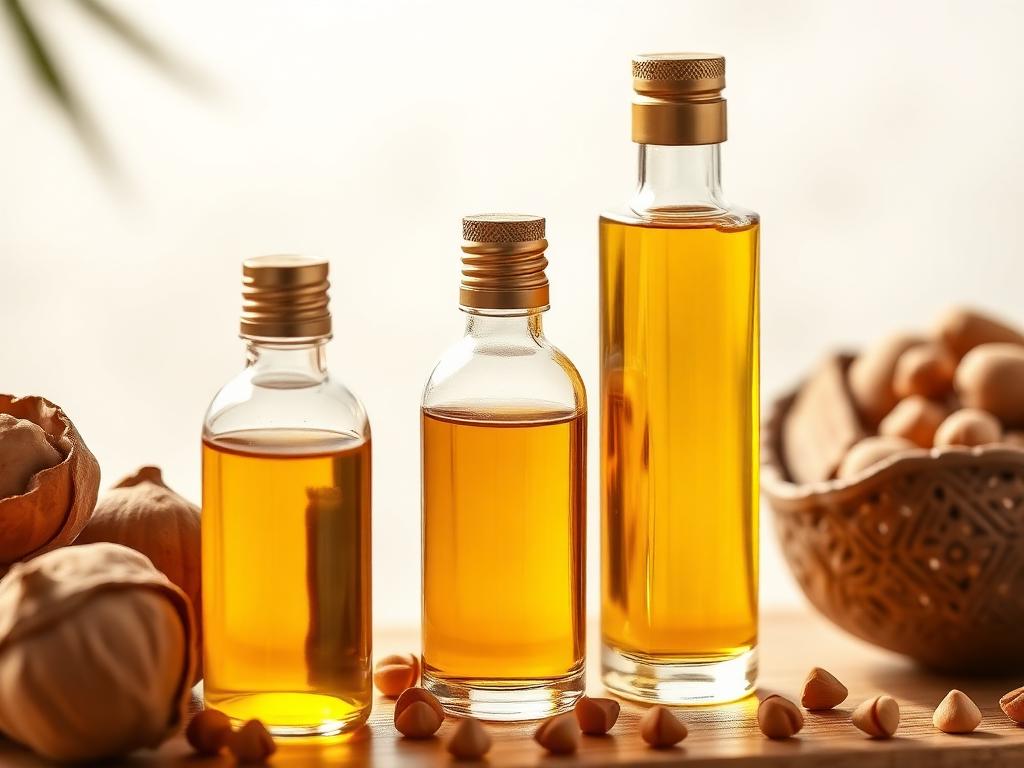
Argan oil's journey from Moroccan treasure to global skincare staple is one of the most remarkable stories in the beauty industry. For centuries, the Berber women of Morocco's Argan forests held the secret of this extraordinary oil, using it to protect their skin and hair from the harsh desert climate.
The argan tree itself is a botanical wonder, growing only in a small region of southwestern Morocco. These ancient trees can live 200 years or more, their gnarled trunks and thorny branches providing both the nuts that yield the oil and browse for the famous tree-climbing goats of the region.
Extracting argan oil traditionally requires extraordinary patience and skill. The process begins with collecting the nuts, either from fallen fruit or from goat droppings (the goats eat the fruit and excrete the indigestible nuts). The hard shells are cracked by hand, and the kernels inside are roasted and ground into paste, then kneaded for hours until the golden oil finally emerges.
The first time I used argan oil on my face, I was immediately struck by how quickly it absorbed, leaving no greasy residue despite being pure oil. This is due to argan's unique fatty acid profile—high in oleic and linoleic acids in a balance that closely matches human sebum. Your skin recognizes it as compatible and drinks it in.
Modern production methods have made argan oil more accessible, though the best quality still comes from traditional cooperatives where Berber women perform the extraction by hand. Choosing authentic argan oil means supporting these communities and receiving a product made with centuries of accumulated wisdom.
I use argan oil daily, a few drops pressed into damp skin after washing. It has transformed my understanding of oils in skincare—they're not just for dry skin, not just for night, not just for special occasions. The right oil, used correctly, enhances any skin type and any routine.
Safety Warnings
- Ensure oil is pure - no adulterants
- Small percentage of people are allergic - patch test
- Store away from light and heat
- Authentic argan should smell slightly nutty, not perfumed
Tools Needed
- Dark glass bottle for storage
- Clean dropper for application
- Understanding of labeling terms
Ingredients
Step-by-Step Instructions
Source Quality Oil
Look for cold-pressed, unrefined argan in dark glass bottles.
Patch Test
Apply small amount to inner arm. Wait 24 hours.
Daily Use
Apply 2-3 drops to damp skin after cleansing.
Hair Treatment
Apply to ends of damp hair; can also use as pre-shampoo treatment.
🔧 Common Mistakes & Fixes
📦 Storage Tips
- Keep in dark glass bottle
- Store in cool, dark location
- Use within 6 months of opening
- Refrigeration extends life but may cause clouding
🔗 References & Further Reading
Independent sources for the chemistry and safety information on this page. We are not affiliated with any of them.
- 1.Lauric Acid (CID 3893)(opens in a new tab)
PubChem, National Library of Medicine
The fatty acid that drives coconut oil’s hardness and cleansing power in a recipe.
- 2.Saponification(opens in a new tab)
Wikipedia
The chemical reaction behind every bar of real soap, with reaction equations and history.
- 3.Sodium Hydroxide (CID 14798)(opens in a new tab)
PubChem, National Library of Medicine
Full chemical and hazard profile for lye, including GHS classification and handling data.
- 4.Sodium Hydroxide Poisoning(opens in a new tab)
MedlinePlus, National Institutes of Health
Symptoms and emergency first-aid steps for lye exposure. Worth reading before you open the bottle.
- 5.Personal Protective Equipment — Overview(opens in a new tab)
U.S. Occupational Safety and Health Administration
What eye, hand, and skin protection actually protects against, and how to choose it.
- 6.Poison Help(opens in a new tab)
U.S. Health Resources and Services Administration
Poison control hotline and online help. Keep this reachable while you work.
- 7.Handcrafted Soap and Cosmetic Guild(opens in a new tab)
HSCG
Industry association for handcrafted soap makers, with labeling and regulatory guidance.
- 8.Safer Chemical Ingredients List(opens in a new tab)
U.S. Environmental Protection Agency
EPA-reviewed ingredients grouped by function, useful when substituting additives.