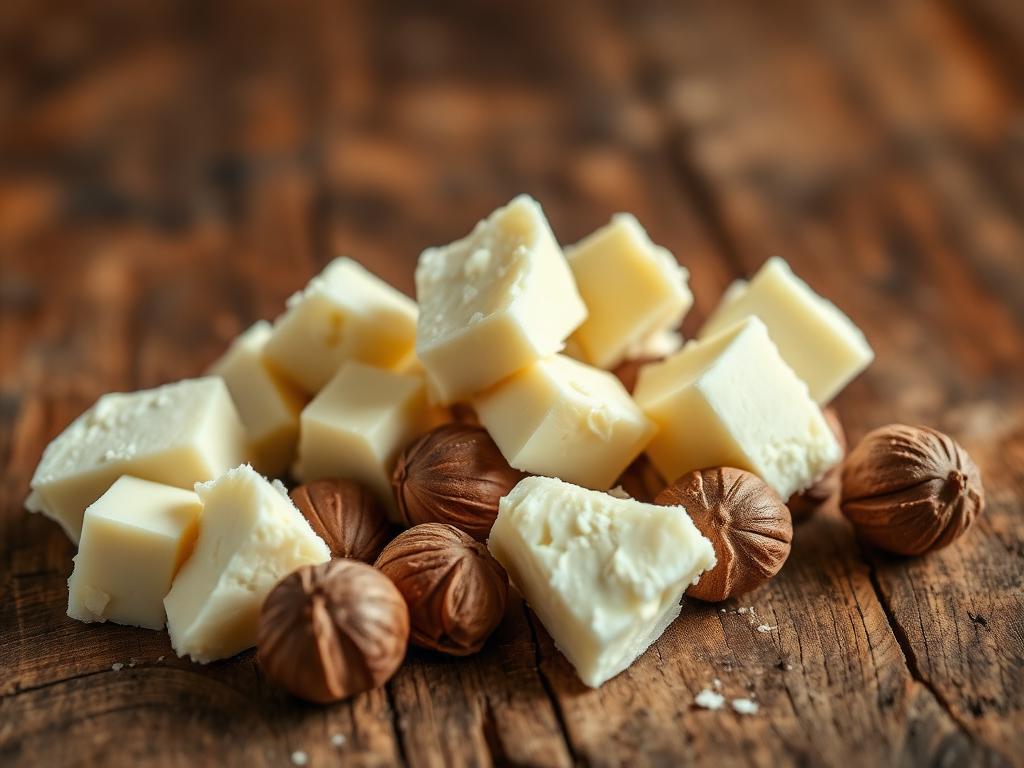
The first time I held a chunk of raw shea butter, I wasn't sure what to think. It looked like pale yellow clay and smelled faintly of nuts and smoke. Coming from the sleek tubes and pumps of department store cosmetics, this rough, unprocessed substance seemed almost primitive. But shea butter's simplicity belies its remarkable versatility in handmade skincare.
Shea butter comes from the nut of the African shea tree, harvested and processed using methods passed down through generations of West African women. The traditional extraction process involves roasting, grinding, boiling, and kneading—labor-intensive work that supports communities across the shea belt from Senegal to Ethiopia. When you buy quality shea butter, you're participating in a supply chain that empowers women entrepreneurs in rural Africa.
In DIY skincare, shea butter serves as a foundational ingredient for countless products. Body butters rely on its creamy texture and solid-at-room-temperature consistency. Lip balms benefit from its emollient properties. Soap makers add it for its conditioning contribution to the final bar. Understanding how to work with shea butter opens doors to an entire category of homemade body care products.
The graininess problem frustrates many beginning shea butter crafters. You melt your butter, add your other ingredients, pour into containers—and somehow end up with a gritty, unpleasant texture that feels like sand mixed into your cream. The culprit is shea butter's complex crystalline structure. When melted and cooled slowly, certain fatty acids crystallize into large, perceptible grains. The solution involves either rapid cooling or tempering—techniques borrowed from chocolate making that force the butter to form tiny, imperceptible crystals instead.
Refined versus unrefined represents the major choice when purchasing shea butter. Unrefined butter retains its natural yellow color and distinctive nutty-smoky scent—characteristics some crafters prize and others find overwhelming. Refined butter loses most of this character through processing, emerging white and nearly scentless. Neither is superior; the choice depends entirely on your preference and intended application.
Safety Warnings
- Latex allergy: shea may cause reactions in latex-sensitive individuals
- Do a patch test before widespread use
- Unrefined shea has natural scent that some find strong
Tools Needed
- Kitchen scale
- Double boiler or microwave
- Hand mixer (for whipped products)
- Storage containers
Ingredients
Step-by-Step Instructions
Grades of Shea Butter
Unrefined (raw) is yellow with nutty scent. Refined is white and odorless. Both work well in DIY products.
Melting Shea Butter
Melt slowly using double boiler or low microwave power. Overheating causes grainy texture.
Avoiding Graininess
Graininess occurs when shea cools too slowly. Quick cooling or tempering prevents this.
Substitutions
Mango butter or cocoa butter can substitute. They have different textures - mango is softer, cocoa is harder.
🔧 Common Mistakes & Fixes
📦 Storage Tips
- Store in cool place (not refrigerator unless very hot climate)
- Shea butter has 2-year shelf life
- Keep sealed to prevent oxidation
🔗 References & Further Reading
Independent sources for the chemistry and safety information on this page. We are not affiliated with any of them.
- 1.Lauric Acid (CID 3893)(opens in a new tab)
PubChem, National Library of Medicine
The fatty acid that drives coconut oil’s hardness and cleansing power in a recipe.
- 2.Saponification(opens in a new tab)
Wikipedia
The chemical reaction behind every bar of real soap, with reaction equations and history.
- 3.Sodium Hydroxide (CID 14798)(opens in a new tab)
PubChem, National Library of Medicine
Full chemical and hazard profile for lye, including GHS classification and handling data.
- 4.Sodium Hydroxide Poisoning(opens in a new tab)
MedlinePlus, National Institutes of Health
Symptoms and emergency first-aid steps for lye exposure. Worth reading before you open the bottle.
- 5.Personal Protective Equipment — Overview(opens in a new tab)
U.S. Occupational Safety and Health Administration
What eye, hand, and skin protection actually protects against, and how to choose it.
- 6.Poison Help(opens in a new tab)
U.S. Health Resources and Services Administration
Poison control hotline and online help. Keep this reachable while you work.
- 7.Handcrafted Soap and Cosmetic Guild(opens in a new tab)
HSCG
Industry association for handcrafted soap makers, with labeling and regulatory guidance.
- 8.Safer Chemical Ingredients List(opens in a new tab)
U.S. Environmental Protection Agency
EPA-reviewed ingredients grouped by function, useful when substituting additives.