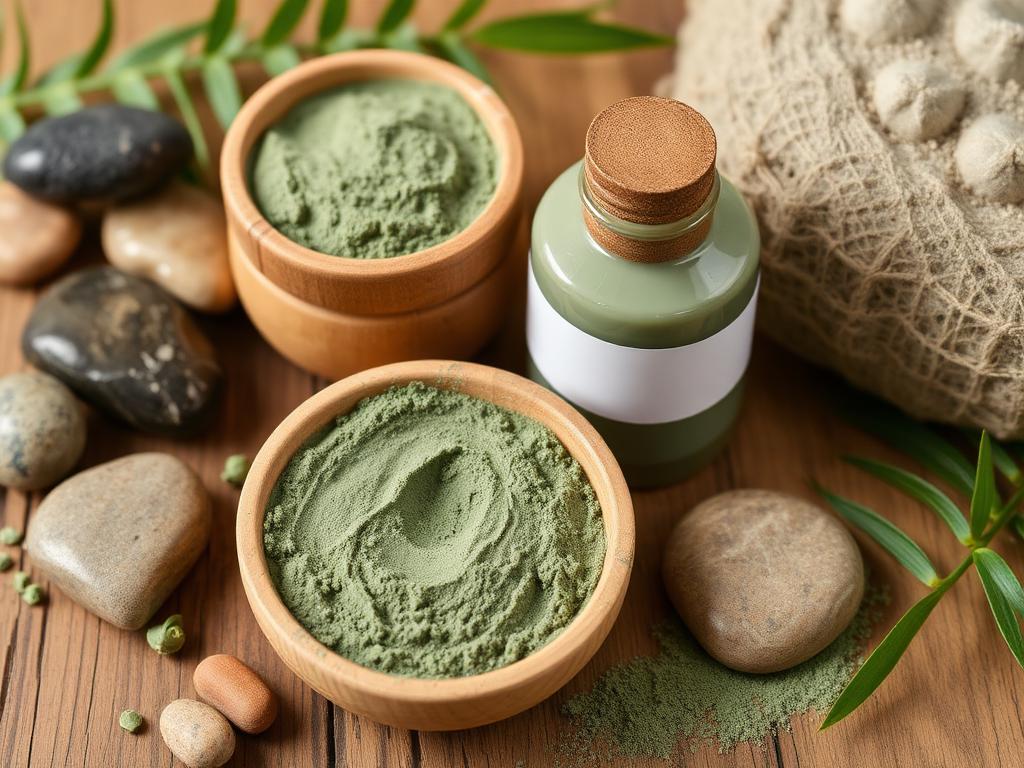
Bentonite clay has a remarkable property that sets it apart from other clays: when mixed with water, it swells to many times its dry volume, creating a gel-like substance with an enormous surface area. This swelling capacity gives bentonite its powerful ability to attract and bind impurities.
The clay forms from volcanic ash that has aged for millions of years, slowly transforming into a mineral-rich substance dominated by montmorillonite. The largest deposits in the United States are found in Wyoming, which is why you'll sometimes see it sold as "Wyoming clay." Each region's bentonite has slightly different properties based on its specific mineral composition.
In cold process soap, bentonite clay serves multiple purposes. It adds slip, making razors glide more smoothly for shave soaps. It provides mild exfoliation and draws impurities from skin during washing. The mineral content gives soap a silky, moisturizing feel. Most soap makers add 1-2 tablespoons per pound of oils.
For facial masks, bentonite clay is extraordinarily effective at drawing out excess oil and impurities. The clay's negative charge attracts positively charged toxins and heavy metals, binding them for removal. After a bentonite mask, skin feels deeply cleaned—perhaps too clean for some people. Those with dry or sensitive skin should use it sparingly.
One crucial rule: never let metal touch bentonite clay. The clay will interact with metal, potentially deactivating its beneficial properties and contaminating the clay with metallic compounds. Use glass, ceramic, or wooden utensils exclusively.
I keep bentonite clay in my formulating cabinet for soap recipes and occasional masks. It's one of those ingredients that does exactly what it promises—a reliable workhorse in the natural skincare world.
Safety Warnings
- Never use metal utensils or containers with bentonite
- Can be drying - not for daily use on dry skin
- Mix with water only when ready to use
- Inhaling clay dust can be irritating
Tools Needed
- Glass or ceramic mixing bowl
- Wooden or plastic spoon
- Airtight storage container
- Measuring spoons
Ingredients
Step-by-Step Instructions
Source Quality Clay
Look for food-grade, pure bentonite without additives.
Store Properly
Keep dry in airtight container away from metals.
Mix for Masks
Combine with water or apple cider vinegar to form paste.
Add to Soap
Disperse in small amount of water before adding to soap batter.
🔧 Common Mistakes & Fixes
📦 Storage Tips
- Store dry in airtight container
- Keep away from any metal
- Dry clay keeps indefinitely
- Don't store pre-mixed masks
🔗 References & Further Reading
Independent sources for the chemistry and safety information on this page. We are not affiliated with any of them.
- 1.Lauric Acid (CID 3893)(opens in a new tab)
PubChem, National Library of Medicine
The fatty acid that drives coconut oil’s hardness and cleansing power in a recipe.
- 2.Saponification(opens in a new tab)
Wikipedia
The chemical reaction behind every bar of real soap, with reaction equations and history.
- 3.Sodium Hydroxide (CID 14798)(opens in a new tab)
PubChem, National Library of Medicine
Full chemical and hazard profile for lye, including GHS classification and handling data.
- 4.Sodium Hydroxide Poisoning(opens in a new tab)
MedlinePlus, National Institutes of Health
Symptoms and emergency first-aid steps for lye exposure. Worth reading before you open the bottle.
- 5.Personal Protective Equipment — Overview(opens in a new tab)
U.S. Occupational Safety and Health Administration
What eye, hand, and skin protection actually protects against, and how to choose it.
- 6.Poison Help(opens in a new tab)
U.S. Health Resources and Services Administration
Poison control hotline and online help. Keep this reachable while you work.
- 7.Handcrafted Soap and Cosmetic Guild(opens in a new tab)
HSCG
Industry association for handcrafted soap makers, with labeling and regulatory guidance.
- 8.Safer Chemical Ingredients List(opens in a new tab)
U.S. Environmental Protection Agency
EPA-reviewed ingredients grouped by function, useful when substituting additives.