Calendula flowers have graced apothecary shelves for centuries, their bright orange petals representing sunshine bottled in plant form. Known by its other name, pot marigold, this cheerful flower has traditional associations with gentle care that make it a natural choice for soap makers seeking a mild, soothing bar.
Creating calendula soap begins weeks before you ever mix oils with lye. The process starts with infusing olive oil with dried calendula petals—a slow extraction that transfers the flower's color and compounds into the oil. Some soapmakers use quick heat methods, but I prefer the patience of cold infusion. Two weeks of waiting, daily shaking, and the resulting golden oil justifies every day of anticipation.
The infusion process itself is meditative. You measure dried calendula petals into a jar, cover them with olive oil, seal the jar, and wait. Each day you give it a shake, watching the oil gradually shift from pale yellow-green to rich golden orange. The color won't fully survive saponification, but some of that sunset warmth remains in the finished bars.
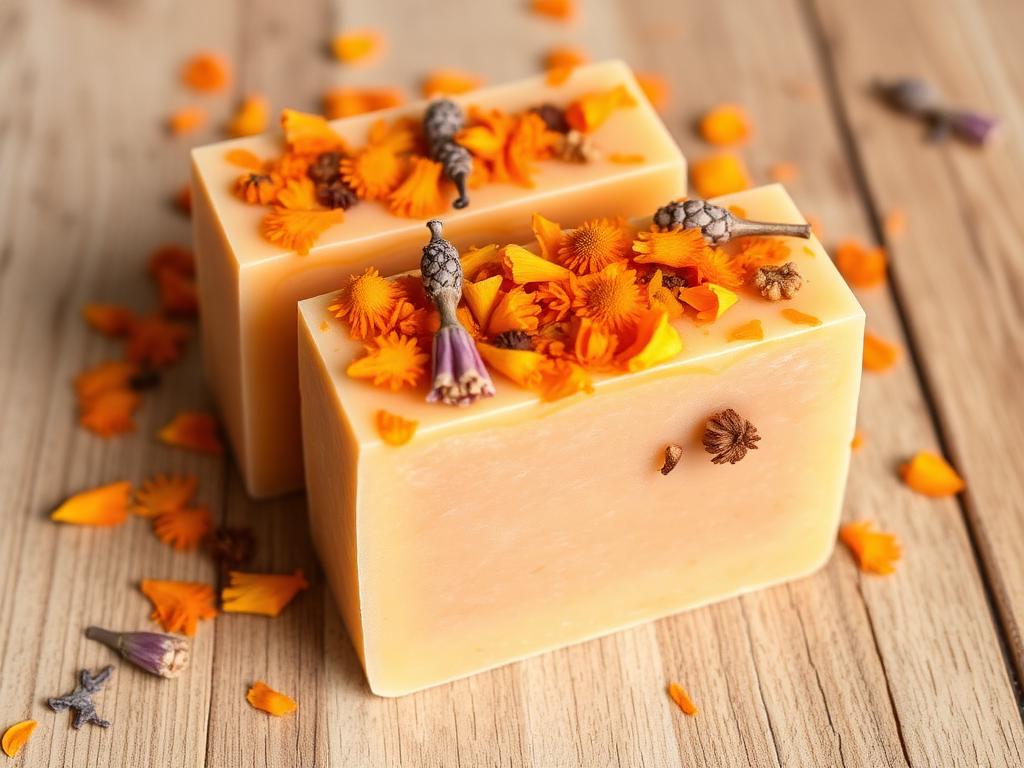
Dried calendula petals make beautiful decorations for soap tops, and unlike many botanicals, they retain their orange color reasonably well in cold process soap. The trick is placing them only on the surface, where they're exposed to air rather than trapped in the high-pH soap matrix. Interior petals inevitably turn brown; surface petals may darken but often keep enough color to remain attractive.
The resulting bars combine the gentleness of high-olive-oil soap with the traditional associations of calendula. Whether calendula provides actual skincare benefits in soap (remembering that saponification transforms most ingredients) matters less than the intention behind the making. This is soap created with care, using ingredients chosen deliberately for their perceived gentleness.
Safety Warnings
- Standard cold process lye safety required
- Some people are allergic to calendula/marigolds
- Infused oils may have shorter shelf life - use fresh
- Start infusion 2-4 weeks before planned soap making
Tools Needed
- Safety goggles and chemical-resistant gloves
- Digital scale
- Stick blender
- Thermometer
- Silicone mold
- Mason jar for oil infusion
Ingredients
Step-by-Step Instructions
Make Infused Oil (2-4 weeks ahead)
Fill jar 1/3 with dried calendula petals, cover with olive oil. Shake daily for 2-4 weeks. Strain before use.
Make Lye Solution
Add lye to distilled water. Cool to approximately 100°F.
Combine Oils
Melt coconut oil, add infused olive oil. Cool to 100°F.
Blend to Trace
Add lye solution to oils, blend to light-medium trace.
Pour and Decorate
Pour into mold. Immediately sprinkle calendula petals on top and press gently.
Cure
Insulate, unmold after 48 hours. Cure 4-6 weeks.
🔧 Common Mistakes & Fixes
📦 Storage Tips
- Cure minimum 4 weeks
- Store away from light to preserve golden color
- Use within 1 year for best quality
🔗 References & Further Reading
Independent sources for the chemistry and safety information on this page. We are not affiliated with any of them.
- 1.Soap Making Safety(opens in a new tab)
Handcrafted Soap and Cosmetic Guild
Workspace, storage, and handling practices specific to lye-based soap making.
- 2.Saponification(opens in a new tab)
Wikipedia
The chemical reaction behind every bar of real soap, with reaction equations and history.
- 3.Sodium Hydroxide (CID 14798)(opens in a new tab)
PubChem, National Library of Medicine
Full chemical and hazard profile for lye, including GHS classification and handling data.
- 4.Sodium Hydroxide Poisoning(opens in a new tab)
MedlinePlus, National Institutes of Health
Symptoms and emergency first-aid steps for lye exposure. Worth reading before you open the bottle.
- 5.Personal Protective Equipment — Overview(opens in a new tab)
U.S. Occupational Safety and Health Administration
What eye, hand, and skin protection actually protects against, and how to choose it.
- 6.Poison Help(opens in a new tab)
U.S. Health Resources and Services Administration
Poison control hotline and online help. Keep this reachable while you work.
- 7.Handcrafted Soap and Cosmetic Guild(opens in a new tab)
HSCG
Industry association for handcrafted soap makers, with labeling and regulatory guidance.
- 8.Safer Chemical Ingredients List(opens in a new tab)
U.S. Environmental Protection Agency
EPA-reviewed ingredients grouped by function, useful when substituting additives.