My grandmother kept a jar of raw honey on her kitchen windowsill. Sunlight would filter through it, turning the honey into liquid amber. She used it for everything—sweetening tea, soothing sore throats, and mixing into homemade face masks. When I started making soap, honey was the first ingredient I wanted to include as an homage to her practical wisdom.
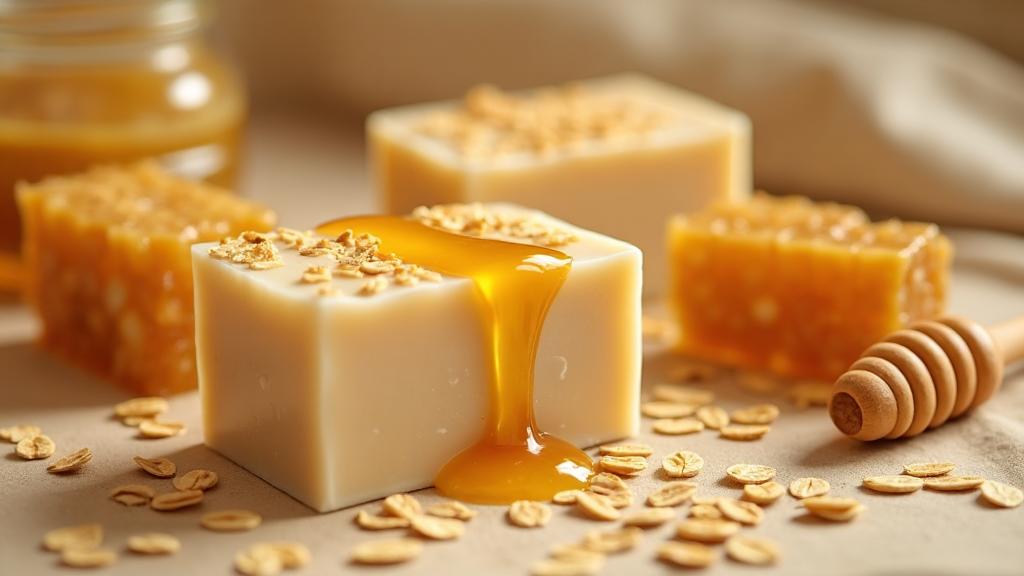
This oatmeal and honey soap brings together two pantry staples that have been used in folk skincare for centuries. Ground oatmeal provides gentle texture, while raw honey adds its distinctive golden warmth to the final bar. The goat milk base contributes a creamy quality that makes these bars feel special without being complicated to create.
I developed this recipe during a particularly gray winter. Something about the warm, comforting colors—the soft cream of the goat milk base, the speckled beige of the oatmeal, the amber glow of honey—felt like bottled sunshine. Each bar looks slightly different depending on how the oatmeal distributes throughout the mixture, giving every piece a handcrafted character.
The process takes only marginally longer than basic melt and pour because of the extra ingredients. Grinding the oatmeal finely ensures even distribution and prevents any scratchy bits. The honey needs to be stirred in thoroughly while the base is still warm enough to keep it fluid. These small additional steps yield significant visual and textural improvements.
First-time makers often worry about the oatmeal sinking to the bottom. I'll share my trick: wait until the soap base cools enough to form a thin skin on top, then stir vigorously before pouring. This slight thickening suspends the oatmeal particles throughout the bar rather than letting gravity pull them down. Patience makes perfect, as my grandmother would say.
Safety Warnings
- Use heat-resistant containers when melting soap
- Keep melted soap away from children
- Be careful with hot honey - it can burn
- Use oven mitts when handling hot materials
Tools Needed
- Double boiler or microwave-safe container
- Silicone soap mold
- Mixing spoon
- Kitchen scale
- Coffee grinder (for oatmeal)
Ingredients
Step-by-Step Instructions
Prepare the Oatmeal
Grind regular oatmeal in a coffee grinder until fine. Set aside 2 tablespoons.
Cut and Melt the Base
Cut the goat milk base into small cubes and melt using 30-second microwave intervals.
Add Honey and Oatmeal
Once melted, let cool slightly then stir in honey until dissolved. Add ground oatmeal and mix well.
Pour and Cool
Pour into mold and sprinkle a few whole oats on top for decoration. Let cool for 3-4 hours.
🔧 Common Mistakes & Fixes
📦 Storage Tips
- Store in cool, dry place
- Honey soaps may "sweat" in humidity - wrap well
- Use within 6 months for best quality
🔗 References & Further Reading
Independent sources for the chemistry and safety information on this page. We are not affiliated with any of them.
- 1.Glycerol (CID 753)(opens in a new tab)
PubChem, National Library of Medicine
Properties of glycerin, the humectant that makes melt & pour bases sweat in humid air.
- 2.Saponification(opens in a new tab)
Wikipedia
The chemical reaction behind every bar of real soap, with reaction equations and history.
- 3.Sodium Hydroxide (CID 14798)(opens in a new tab)
PubChem, National Library of Medicine
Full chemical and hazard profile for lye, including GHS classification and handling data.
- 4.Sodium Hydroxide Poisoning(opens in a new tab)
MedlinePlus, National Institutes of Health
Symptoms and emergency first-aid steps for lye exposure. Worth reading before you open the bottle.
- 5.Personal Protective Equipment — Overview(opens in a new tab)
U.S. Occupational Safety and Health Administration
What eye, hand, and skin protection actually protects against, and how to choose it.
- 6.Poison Help(opens in a new tab)
U.S. Health Resources and Services Administration
Poison control hotline and online help. Keep this reachable while you work.
- 7.Handcrafted Soap and Cosmetic Guild(opens in a new tab)
HSCG
Industry association for handcrafted soap makers, with labeling and regulatory guidance.
- 8.Safer Chemical Ingredients List(opens in a new tab)
U.S. Environmental Protection Agency
EPA-reviewed ingredients grouped by function, useful when substituting additives.