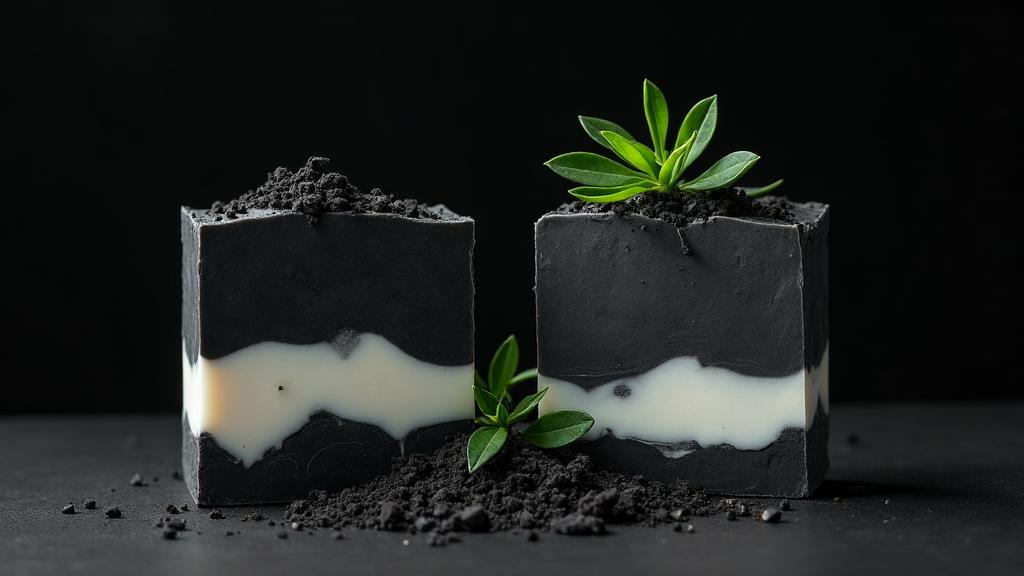
The first time I saw activated charcoal soap at a craft fair, I couldn't look away. Jet black against pristine white, the contrast was almost architectural. The soap maker noticed my fascination and laughed. "Everyone stares at these," she said. "They sell faster than anything else I make." I understood immediately. Some products sell themselves through sheer visual impact.
Creating layered soap sounds intimidating, but it's actually just two batches of basic melt and pour poured at the right times. The drama comes from contrast—the stark opposition of dark and light, the clean horizontal line where they meet. When you slice through a finished loaf, that reveal moment feels like unwrapping a present you made for yourself.
Activated charcoal is fascinating stuff. Processed at high temperatures to create millions of tiny pores, it's been used in hospitals for decades. In soap making, it serves a purely aesthetic purpose—there's nothing quite like that deep, true black. A single teaspoon transforms clear soap base into something that looks almost like polished obsidian.
Tea tree essential oil pairs naturally with the dramatic visual. Its distinctive herbal scent has a fresh, almost medicinal quality that complements the striking appearance. I recommend adding it to both layers so the finished bar has consistent fragrance throughout. Some makers prefer to leave one layer unscented, letting the tea tree notes carry the whole bar. Experiment and find what pleases you.
The technique requires attention to timing. Pour the first layer too hot, and it'll melt your second layer when you add it. Wait too long, and the layers won't bond properly. I'll walk you through the sweet spot—that moment when the first layer has skinned over but still feels slightly warm to the touch. Master this timing, and you can create layered designs of any complexity.
Safety Warnings
- Activated charcoal can stain surfaces and clothing
- Work on protected surfaces
- Use gloves when handling charcoal powder
- Keep tea tree oil away from eyes
Tools Needed
- Two microwave-safe containers
- Rectangular silicone mold
- Mixing spoons
- Kitchen scale
- Gloves
Ingredients
Step-by-Step Instructions
Prepare First Layer
Melt white base, add half the tea tree oil, pour into mold. Let set for 20 minutes until firm but still warm.
Prepare Charcoal Layer
Melt clear base, add charcoal powder and remaining tea tree oil. Stir thoroughly until evenly black.
Score and Pour
Lightly scratch the surface of the first layer with a fork. Spray with alcohol, then pour charcoal layer.
Cool and Unmold
Let cool completely for 4-6 hours before unmolding.
🔧 Common Mistakes & Fixes
📦 Storage Tips
- Wrap in dark paper to prevent light exposure
- Charcoal color remains stable for 1+ year
- Store away from light-colored items
🔗 References & Further Reading
Independent sources for the chemistry and safety information on this page. We are not affiliated with any of them.
- 1.Glycerol (CID 753)(opens in a new tab)
PubChem, National Library of Medicine
Properties of glycerin, the humectant that makes melt & pour bases sweat in humid air.
- 2.Saponification(opens in a new tab)
Wikipedia
The chemical reaction behind every bar of real soap, with reaction equations and history.
- 3.Sodium Hydroxide (CID 14798)(opens in a new tab)
PubChem, National Library of Medicine
Full chemical and hazard profile for lye, including GHS classification and handling data.
- 4.Sodium Hydroxide Poisoning(opens in a new tab)
MedlinePlus, National Institutes of Health
Symptoms and emergency first-aid steps for lye exposure. Worth reading before you open the bottle.
- 5.Personal Protective Equipment — Overview(opens in a new tab)
U.S. Occupational Safety and Health Administration
What eye, hand, and skin protection actually protects against, and how to choose it.
- 6.Poison Help(opens in a new tab)
U.S. Health Resources and Services Administration
Poison control hotline and online help. Keep this reachable while you work.
- 7.Handcrafted Soap and Cosmetic Guild(opens in a new tab)
HSCG
Industry association for handcrafted soap makers, with labeling and regulatory guidance.
- 8.Safer Chemical Ingredients List(opens in a new tab)
U.S. Environmental Protection Agency
EPA-reviewed ingredients grouped by function, useful when substituting additives.