Every autumn, when the first crisp leaves begin to fall, I find myself craving the warm, comforting scent of cinnamon. It reminds me of my grandmother's kitchen, where cinnamon sticks always sat in a jar near the stove, ready to be added to apple pies and hot cider. This soap captures that feeling of home and warmth in a bar.
The idea to make cinnamon soap came during a particularly dreary November. I was exhausted from work, missing the comforting rituals of my childhood. On impulse, I sprinkled some cinnamon from my spice rack into melted soap base. The kitchen immediately filled with that familiar, welcoming fragrance, and I felt something in my chest unknot.
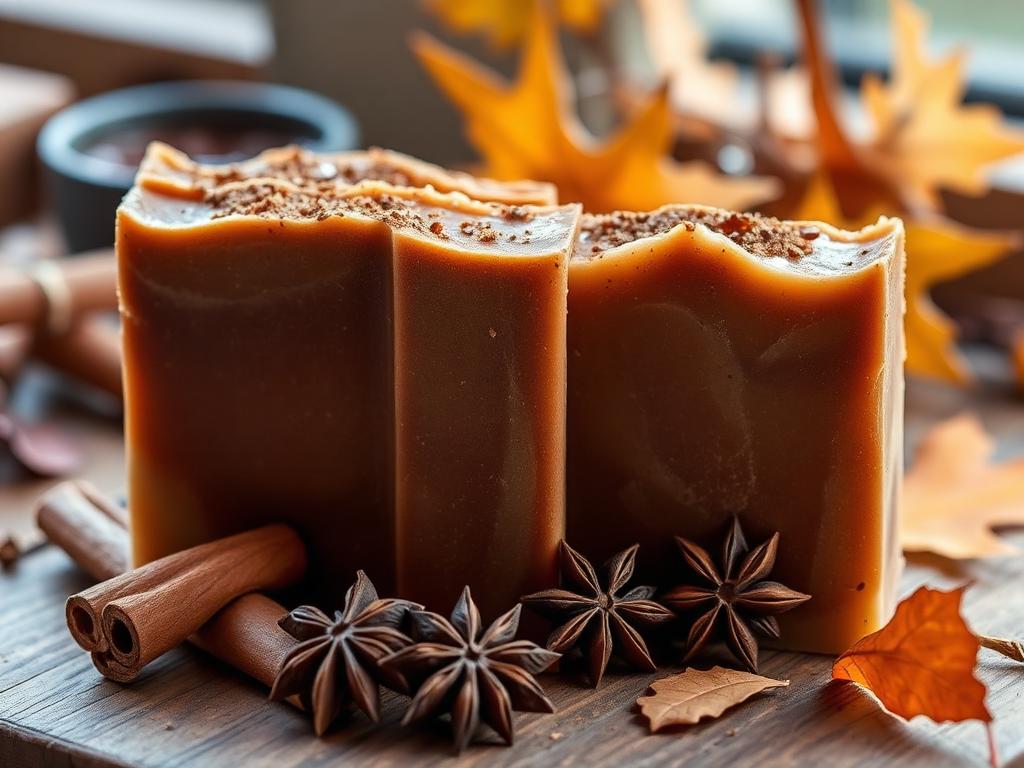
Working with cinnamon requires some caution. The same compounds that make it smell so wonderful can be irritating to some skin types in high concentrations. I learned to use it sparingly, enhancing rather than overwhelming. The speckled appearance the ground cinnamon creates in the soap adds rustic visual appeal—each bar looks like something crafted in a cozy cottage kitchen.
Adding clove essential oil deepens the spice profile without competing with the cinnamon. Just a few drops create complexity, a whisper of something extra that makes people pause and breathe deeply when they use the soap. It's the olfactory equivalent of wrapping yourself in a favorite sweater.
I make large batches of this soap in October and give them as holiday gifts. Recipients always comment on how the scent makes them feel nostalgic for something they can't quite name—warm kitchens, family gatherings, simpler times. That's the real magic of this soap: it doesn't just clean, it comforts.
Some days I'll unwrap a bar just to hold it, breathing in that cinnamon warmth while rain patters against the windows. It's my portable autumn, available any time I need it.
Safety Warnings
- Cinnamon can be irritating to sensitive skin - patch test first
- Do not use cinnamon bark oil - it is much stronger than leaf oil
- Keep concentration low - cinnamon is potent
- Pregnant women should avoid concentrated cinnamon products
Tools Needed
- Microwave-safe container
- Silicone molds
- Mixing spoon
- Kitchen scale
- Fine mesh strainer (optional)
Ingredients
Step-by-Step Instructions
Melt Base
Cut base into small cubes and melt slowly. Allow to cool to 135°F.
Add Cinnamon
Stir in ground cinnamon until evenly distributed.
Add Essential Oils
Add cinnamon and clove essential oils. Stir gently.
Pour into Molds
Pour into prepared molds. Spray with alcohol.
Cure and Enjoy
Allow to set completely before unmolding.
🔧 Common Mistakes & Fixes
📦 Storage Tips
- Wrap in kraft paper for gift giving
- Store in cool, dark place
- Scent mellows but deepens over time
🔗 References & Further Reading
Independent sources for the chemistry and safety information on this page. We are not affiliated with any of them.
- 1.Glycerol (CID 753)(opens in a new tab)
PubChem, National Library of Medicine
Properties of glycerin, the humectant that makes melt & pour bases sweat in humid air.
- 2.Saponification(opens in a new tab)
Wikipedia
The chemical reaction behind every bar of real soap, with reaction equations and history.
- 3.Sodium Hydroxide (CID 14798)(opens in a new tab)
PubChem, National Library of Medicine
Full chemical and hazard profile for lye, including GHS classification and handling data.
- 4.Sodium Hydroxide Poisoning(opens in a new tab)
MedlinePlus, National Institutes of Health
Symptoms and emergency first-aid steps for lye exposure. Worth reading before you open the bottle.
- 5.Personal Protective Equipment — Overview(opens in a new tab)
U.S. Occupational Safety and Health Administration
What eye, hand, and skin protection actually protects against, and how to choose it.
- 6.Poison Help(opens in a new tab)
U.S. Health Resources and Services Administration
Poison control hotline and online help. Keep this reachable while you work.
- 7.Handcrafted Soap and Cosmetic Guild(opens in a new tab)
HSCG
Industry association for handcrafted soap makers, with labeling and regulatory guidance.
- 8.Safer Chemical Ingredients List(opens in a new tab)
U.S. Environmental Protection Agency
EPA-reviewed ingredients grouped by function, useful when substituting additives.