I made my first citrus soap during a particularly gloomy February, desperate for any reminder that summer would eventually return. The bright scent of oranges filling my kitchen as I worked was exactly the therapy I needed. Now I make citrus soap every winter, a fragrant promise that warmth and sunshine wait on the other side of the cold months.
The challenge with citrus essential oils in cold process soap is that they're notoriously fugitive—the fresh, bright top notes evaporate quickly during the long cure time. I've experimented extensively with anchoring techniques and found that combining citrus oils with a small amount of litsea cubeba creates a more lasting impression. The litsea has similar bright notes but better staying power.
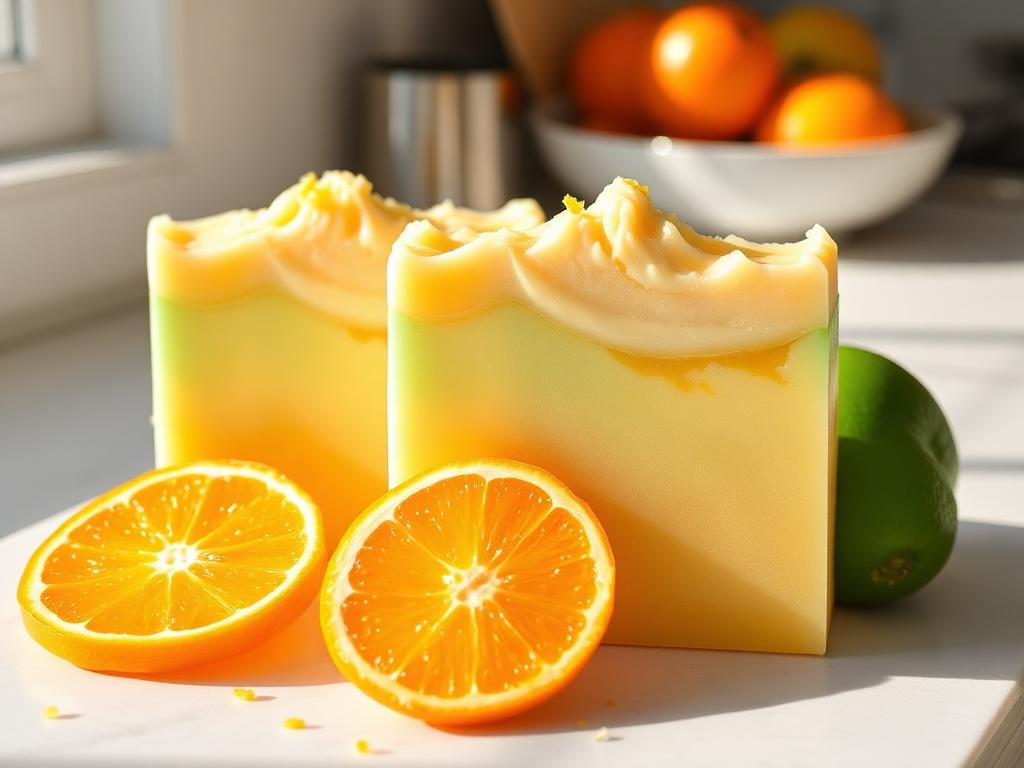
Creating the gradient effect in this soap requires careful timing and temperature control. I divide my batter into portions, coloring them from deep orange at the bottom through sunny yellow to pale lime green at the top. Each layer gets poured at a specific temperature and consistency, building up like sunset clouds.
The sweet almond oil in this recipe is chosen specifically for its mild character—it doesn't compete with or muffle the citrus. It's like a clean canvas waiting for the bright colors of the essential oils to shine through. Palm oil, sourced sustainably, provides hardness and longevity to the finished bars.
I label these soaps "Sunrise" and gift them to friends who struggle with winter. The morning shower becomes a moment of hope, a bright spot in the grey routine. One friend keeps a bar in her car during dreary months—she says the scent that escapes when she opens the door makes commuting bearable.
There's something fundamentally optimistic about citrus. It's the smell of gardens and groves, of places where the sun shines generously. This soap brings a small piece of that generosity into everyday life.
Safety Warnings
- Citrus essential oils are phototoxic - avoid sun exposure after use
- Cold-pressed citrus oils can accelerate trace
- Use distilled versions to reduce phototoxicity
- Work in well-ventilated area
Tools Needed
- Multiple mixing containers
- Immersion blender
- Silicone mold
- Digital thermometer
- Safety gear
- Colorants (yellow, orange micas)
Ingredients
Step-by-Step Instructions
Prepare Lye Solution
Make lye solution and cool to 100°F.
Blend Oils
Melt and combine oils. Cool to match lye temperature.
Divide and Color
Bring to thin trace, then divide into portions. Add colors: orange, yellow, and leave one uncolored.
Add Essential Oils
Add citrus blend to each portion. Stir quickly.
Layer Pour
Pour orange layer first, then yellow, then pale green on top.
Cure
Unmold after 48 hours. Cure 4-6 weeks.
🔧 Common Mistakes & Fixes
📦 Storage Tips
- Wrap in airtight packaging to preserve scent
- Cure full 4-6 weeks
- Use within 6 months for best fragrance
🔗 References & Further Reading
Independent sources for the chemistry and safety information on this page. We are not affiliated with any of them.
- 1.Soap Making Safety(opens in a new tab)
Handcrafted Soap and Cosmetic Guild
Workspace, storage, and handling practices specific to lye-based soap making.
- 2.Saponification(opens in a new tab)
Wikipedia
The chemical reaction behind every bar of real soap, with reaction equations and history.
- 3.Sodium Hydroxide (CID 14798)(opens in a new tab)
PubChem, National Library of Medicine
Full chemical and hazard profile for lye, including GHS classification and handling data.
- 4.Sodium Hydroxide Poisoning(opens in a new tab)
MedlinePlus, National Institutes of Health
Symptoms and emergency first-aid steps for lye exposure. Worth reading before you open the bottle.
- 5.Personal Protective Equipment — Overview(opens in a new tab)
U.S. Occupational Safety and Health Administration
What eye, hand, and skin protection actually protects against, and how to choose it.
- 6.Poison Help(opens in a new tab)
U.S. Health Resources and Services Administration
Poison control hotline and online help. Keep this reachable while you work.
- 7.Handcrafted Soap and Cosmetic Guild(opens in a new tab)
HSCG
Industry association for handcrafted soap makers, with labeling and regulatory guidance.
- 8.Safer Chemical Ingredients List(opens in a new tab)
U.S. Environmental Protection Agency
EPA-reviewed ingredients grouped by function, useful when substituting additives.