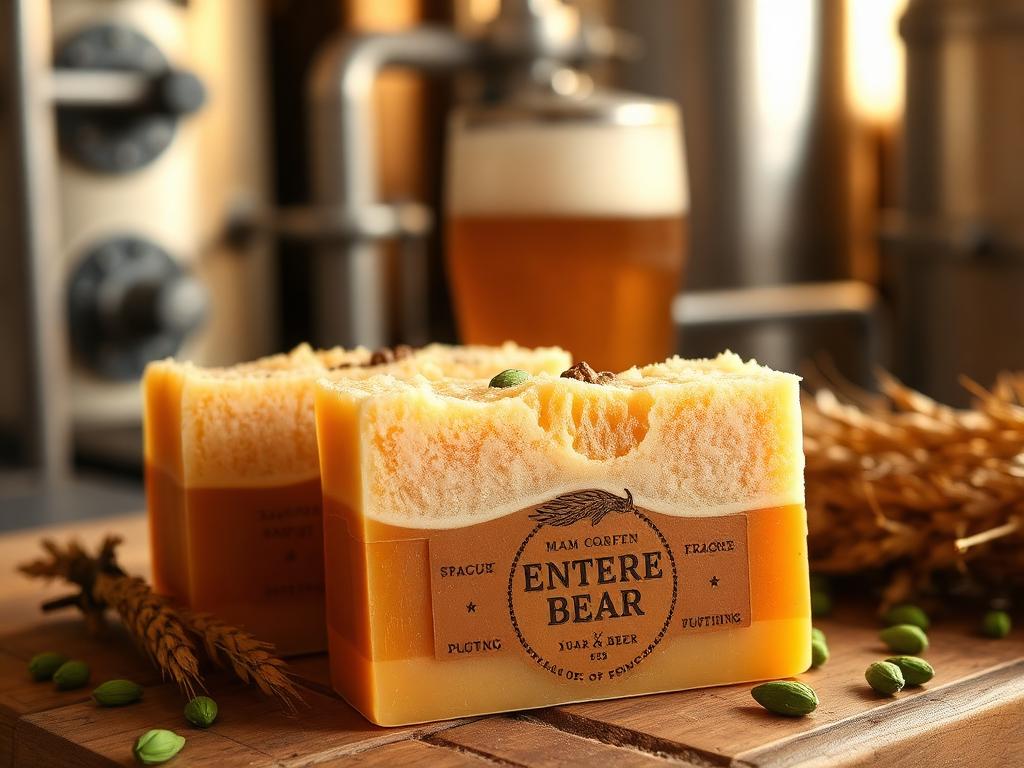
The idea to put beer in soap came from a conversation at a local brewery. The head brewer mentioned that some of their spent grain went to local farmers for animal feed. "It seems wasteful," he said, "all that good stuff." I went home with a growler of their amber ale and an experiment in mind.
Beer as a soap ingredient might sound strange, but it makes perfect sense when you understand the chemistry. The sugars in beer feed saponification, creating extra glycerin and a creamier lather. The hops contain oils that can be conditioning. The result is a soap that feels silkier than a standard recipe, with a subtle background scent that's hard to identify but undeniably pleasant.
The first critical step is degassing the beer completely. Fresh beer in a lye solution is a recipe for disaster—the carbonation causes violent bubbling that can overflow your container and create dangerous splashing. I learned this during my second attempt when a partially-degassed ale erupted in a foamy volcano of caustic disaster. Now I open beer the night before and stir it periodically, or even boil it briefly to drive off all CO2.
Different beer styles create different soaps. Stout makes darker bars with a roasted scent. Wheat beer produces lighter soap with a subtle banana note from the yeast esters. IPAs contribute hop character but can accelerate trace quickly—not for beginners. My favorite remains amber ale, which creates a warm golden bar with balanced characteristics.
Adding honey to beer soap amplifies the natural sugars, making an even creamier lather. The combination smells like a old-fashioned mead hall—honey and grain and something ancient. Men particularly love this soap, finding it masculine without being aggressive.
I've made small batches for the brewery to sell alongside their six-packs. The label says "Shower Beer" and it's become one of their bestsellers. There's something fitting about cleaning yourself with the same ingredients that make something delicious to drink.
Safety Warnings
- Beer MUST be completely flat before adding lye - violent reaction if carbonated
- Beer lye solution may bubble more than water-based
- Work in extremely well-ventilated area - fumes can be strong
- This is an advanced recipe - master basic cold process first
Tools Needed
- Stainless steel pot
- Immersion blender
- Digital thermometer
- Safety gear (goggles, gloves)
- Soap mold
- Kitchen scale
Ingredients
Step-by-Step Instructions
Degas Beer
Leave beer open overnight or boil briefly and cool. Must be completely flat.
Freeze Beer
Freeze beer until slushy. Add lye very slowly to cold beer slush.
Prepare Oils
Melt and combine oils. Cool to approximately 100°F.
Combine
Add lye solution to oils. Blend to thin trace.
Add Honey
Stir in honey at thin trace. Pour into mold immediately.
Insulate and Cure
Do not insulate too heavily - sugars can cause overheating. Cure 6 weeks.
🔧 Common Mistakes & Fixes
📦 Storage Tips
- Cure minimum 6 weeks
- Beer scent mellows during cure
- Store in cool, dry place
🔗 References & Further Reading
Independent sources for the chemistry and safety information on this page. We are not affiliated with any of them.
- 1.Soap Making Safety(opens in a new tab)
Handcrafted Soap and Cosmetic Guild
Workspace, storage, and handling practices specific to lye-based soap making.
- 2.Saponification(opens in a new tab)
Wikipedia
The chemical reaction behind every bar of real soap, with reaction equations and history.
- 3.Sodium Hydroxide (CID 14798)(opens in a new tab)
PubChem, National Library of Medicine
Full chemical and hazard profile for lye, including GHS classification and handling data.
- 4.Sodium Hydroxide Poisoning(opens in a new tab)
MedlinePlus, National Institutes of Health
Symptoms and emergency first-aid steps for lye exposure. Worth reading before you open the bottle.
- 5.Personal Protective Equipment — Overview(opens in a new tab)
U.S. Occupational Safety and Health Administration
What eye, hand, and skin protection actually protects against, and how to choose it.
- 6.Poison Help(opens in a new tab)
U.S. Health Resources and Services Administration
Poison control hotline and online help. Keep this reachable while you work.
- 7.Handcrafted Soap and Cosmetic Guild(opens in a new tab)
HSCG
Industry association for handcrafted soap makers, with labeling and regulatory guidance.
- 8.Safer Chemical Ingredients List(opens in a new tab)
U.S. Environmental Protection Agency
EPA-reviewed ingredients grouped by function, useful when substituting additives.