Some mornings, coffee isn't enough. Those days when the alarm feels like an assault, when the bed exerts gravitational pull stronger than any physicist could explain, when the thought of consciousness seems genuinely offensive—those are the days that demand intervention beyond caffeine. Those are the days I reach for my eucalyptus peppermint soap.
The combination of eucalyptus and peppermint creates what I call a "sensory alarm clock." The menthol in peppermint provides an actual cooling sensation on skin, while eucalyptus delivers that distinctive camphoraceous scent that seems to clear not just sinuses but mental fog as well. Together, they form an aromatic one-two punch that makes drowsiness difficult to maintain.
I discovered this combination during a particularly brutal winter cold. Stuffed up and exhausted, I made a batch of strongly-scented eucalyptus soap hoping it would help me breathe. It did—but it also woke me up more effectively than my morning espresso. The next batch included peppermint, and the formula has remained unchanged since.
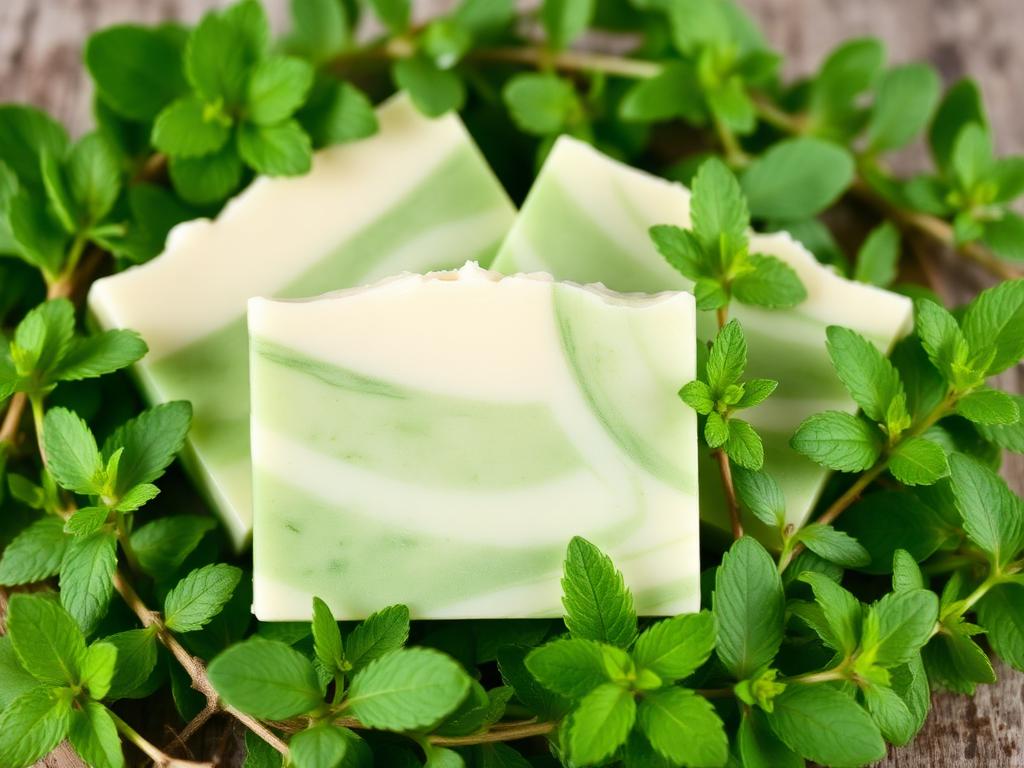
The visual design I prefer keeps things simple: a soft sage green that echoes the herbal theme without overwhelming it. A light dusting of mica on top adds subtle shimmer reminiscent of morning dew. The shea butter base contributes creaminess that balances the potentially drying effects of heavily fragranced soap, keeping the bar gentle enough for daily use.
Placement matters with this soap. I keep mine at the far end of the shower, used only at the end of my routine when I need that final push toward alertness. Using it at the beginning feels like skipping chapters in a book—you need to ease into the wake-up process, not ambush yourself with it.
Safety Warnings
- Peppermint oil can irritate sensitive skin - test first
- Keep away from eyes - menthol causes stinging
- Not recommended for young children
- Eucalyptus may affect people with asthma
Tools Needed
- Microwave-safe container
- Silicone mold
- Mixing spoon
- Kitchen scale
- Spray bottle with alcohol
Ingredients
Step-by-Step Instructions
Melt and Color
Melt base in 30-second intervals. Add green mica and stir until evenly distributed.
Add Essential Oils
Cool to 135°F, add eucalyptus and peppermint oils, stir well.
Pour and Spray
Pour into mold, spray surface with alcohol to remove bubbles.
Cool Completely
Allow 2-4 hours to harden before unmolding.
🔧 Common Mistakes & Fixes
📦 Storage Tips
- Store in cool place to preserve scent
- Use within 6 months for best aromatic effect
- Keep wrapped to prevent scent fading
🔗 References & Further Reading
Independent sources for the chemistry and safety information on this page. We are not affiliated with any of them.
- 1.Glycerol (CID 753)(opens in a new tab)
PubChem, National Library of Medicine
Properties of glycerin, the humectant that makes melt & pour bases sweat in humid air.
- 2.Saponification(opens in a new tab)
Wikipedia
The chemical reaction behind every bar of real soap, with reaction equations and history.
- 3.Sodium Hydroxide (CID 14798)(opens in a new tab)
PubChem, National Library of Medicine
Full chemical and hazard profile for lye, including GHS classification and handling data.
- 4.Sodium Hydroxide Poisoning(opens in a new tab)
MedlinePlus, National Institutes of Health
Symptoms and emergency first-aid steps for lye exposure. Worth reading before you open the bottle.
- 5.Personal Protective Equipment — Overview(opens in a new tab)
U.S. Occupational Safety and Health Administration
What eye, hand, and skin protection actually protects against, and how to choose it.
- 6.Poison Help(opens in a new tab)
U.S. Health Resources and Services Administration
Poison control hotline and online help. Keep this reachable while you work.
- 7.Handcrafted Soap and Cosmetic Guild(opens in a new tab)
HSCG
Industry association for handcrafted soap makers, with labeling and regulatory guidance.
- 8.Safer Chemical Ingredients List(opens in a new tab)
U.S. Environmental Protection Agency
EPA-reviewed ingredients grouped by function, useful when substituting additives.