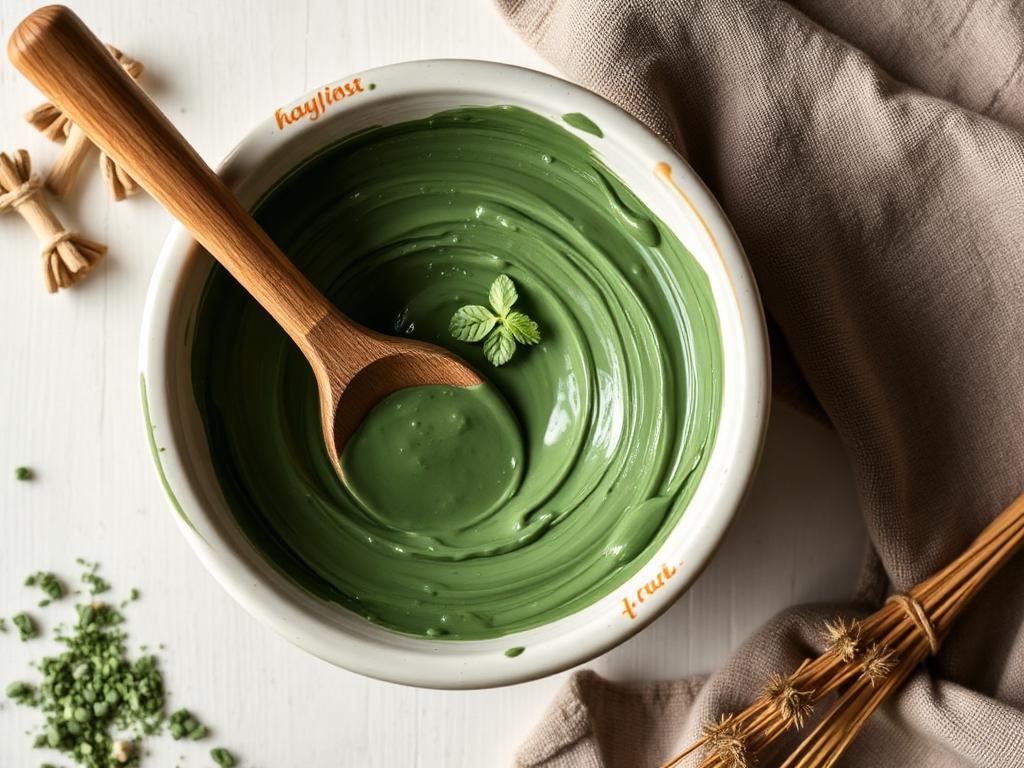
French green clay, or montmorillonite, has been used for centuries in European spas for its remarkable ability to draw impurities from the skin. The first time I applied a clay mask, I was skeptical—how could dirt on my face be healthy? But the feeling afterward, of truly clean skin breathing freely, converted me instantly.
The green color comes from decomposed plant matter and iron oxide, minerals that give this clay its particular properties. Unlike bentonite, which swells when wet, French green clay maintains a smooth, spreadable consistency. It's gentler for facial use while still being effective.
I learned to mix clay fresh for each use rather than making large batches. Clay begins working as soon as it's hydrated, starting to draw out impurities immediately. A premixed mask sitting in a jar would exhaust itself pulling things from the air and container rather than saving its power for skin.
Adding honey to the mask serves multiple purposes. It makes the clay glide on more smoothly, adds humectant properties that prevent the mask from being too drying, and contributes its own antibacterial effects. The result is a mask that cleanses without stripping, leaving skin soft rather than tight.
Tea tree essential oil amplifies the clarifying properties for those dealing with breakouts. For sensitive skin, I substitute lavender or omit essential oils entirely. The clay does plenty on its own.
Mask night has become a self-care ritual in our household. My teenage daughter and I apply our masks together, looking like green-faced monsters while we catch up on the week. The silliness of the visual combined with the seriousness of the self-care creates moments I treasure.
Safety Warnings
- Do not use metal utensils or containers with clay
- Patch test before full face application
- Do not let mask dry completely - can overdry skin
- Rinse thoroughly - clay can clog drains if not rinsed well
Tools Needed
- Ceramic or glass bowl
- Wooden or plastic spoon
- Soft face brush (optional)
- Towel for cleanup
Ingredients
Step-by-Step Instructions
Mix Clay and Water
Combine clay with enough water to form smooth paste.
Add Honey
Stir in honey until well incorporated.
Add Essential Oil
Add tea tree oil if using. Mix well.
Apply to Clean Face
Spread evenly avoiding eye area. Leave 10-15 minutes.
Rinse and Moisturize
Rinse thoroughly with warm water. Follow with moisturizer.
🔧 Common Mistakes & Fixes
📦 Storage Tips
- Mix fresh each time - do not store mixed mask
- Keep dry clay powder in airtight container
- Clay powder keeps indefinitely if kept dry
🔗 References & Further Reading
Independent sources for the chemistry and safety information on this page. We are not affiliated with any of them.
- 1.Essential Oil(opens in a new tab)
Wikipedia
Extraction methods, composition, and documented sensitization risks of essential oils.
- 2.Saponification(opens in a new tab)
Wikipedia
The chemical reaction behind every bar of real soap, with reaction equations and history.
- 3.Sodium Hydroxide (CID 14798)(opens in a new tab)
PubChem, National Library of Medicine
Full chemical and hazard profile for lye, including GHS classification and handling data.
- 4.Sodium Hydroxide Poisoning(opens in a new tab)
MedlinePlus, National Institutes of Health
Symptoms and emergency first-aid steps for lye exposure. Worth reading before you open the bottle.
- 5.Personal Protective Equipment — Overview(opens in a new tab)
U.S. Occupational Safety and Health Administration
What eye, hand, and skin protection actually protects against, and how to choose it.
- 6.Poison Help(opens in a new tab)
U.S. Health Resources and Services Administration
Poison control hotline and online help. Keep this reachable while you work.
- 7.Handcrafted Soap and Cosmetic Guild(opens in a new tab)
HSCG
Industry association for handcrafted soap makers, with labeling and regulatory guidance.
- 8.Safer Chemical Ingredients List(opens in a new tab)
U.S. Environmental Protection Agency
EPA-reviewed ingredients grouped by function, useful when substituting additives.