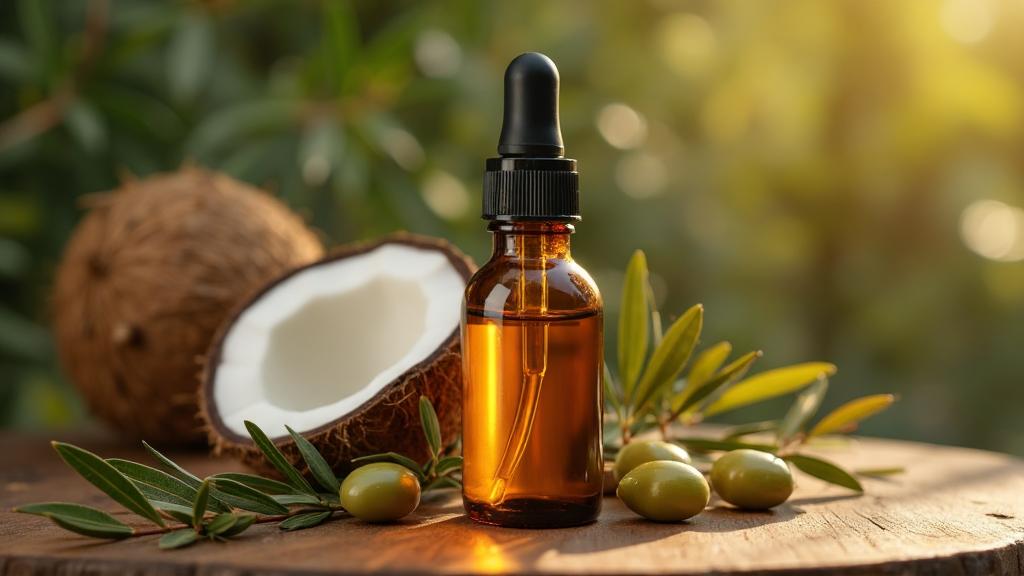
My relationship with commercial hair products ended during a backpacking trip through Southeast Asia. Months away from my usual salon brands, I found myself in a small village market, standing before bottles of pure coconut oil that cost less than a coffee back home. Out of necessity, I started using it on my sun-damaged hair. The results surprised me.
Hair care doesn't need to be complicated. For centuries before the cosmetics industry existed, people maintained healthy hair using simple oils pressed from plants. Coconut oil, olive oil, castor oil, argan oil—these traditional ingredients work just as well now as they did for our ancestors, and they come without the long lists of synthetic compounds that dominate modern product labels.
This recipe takes simplicity to its logical conclusion. Two oils, optionally three if you add a few drops of essential oil for fragrance. That's it. No silicones to build up on your strands, no sulfates to strip away natural oils, no parabens whose safety remains debated. Just plant-based nourishment in its purest form.
The key to success lies in understanding how to use oil-based hair treatments. Unlike commercial conditioners designed to rinse away, these oils work best when used sparingly. A few drops smoothed through damp ends can tame frizz and add shine without weighing hair down. Used more generously as a pre-wash treatment, the oils penetrate the hair shaft during an hour-long soak before shampooing removes the excess.
I still remember that village market, the smell of tropical fruit and incense, the simple wisdom of using what nature provides. These days I make this conditioner blend at home, adjusting the ratio of coconut to olive oil based on how my hair feels that week. Sometimes I add rosemary essential oil for its invigorating scent. The formula remains flexible, adapting to my needs rather than demanding I adapt to it.
Safety Warnings
- Do a strand test first - some hair types may react differently
- Use sparingly - too much oil can weigh down hair
- Keep away from eyes
- Patch test essential oils before adding
Tools Needed
- Small glass bottle with dropper or pump
- Small funnel
- Measuring spoons
Ingredients
Step-by-Step Instructions
Combine Oils
Pour coconut oil and olive oil into a small bottle.
Add Essential Oil
If using, add lavender essential oil and shake well to combine.
How to Use
Apply a few drops to ends of damp or dry hair. Focus on ends, avoid roots.
🔧 Common Mistakes & Fixes
📦 Storage Tips
- Store at room temperature
- Shake before each use
- Use within 6 months
🔗 References & Further Reading
Independent sources for the chemistry and safety information on this page. We are not affiliated with any of them.
- 1.Essential Oil(opens in a new tab)
Wikipedia
Extraction methods, composition, and documented sensitization risks of essential oils.
- 2.Saponification(opens in a new tab)
Wikipedia
The chemical reaction behind every bar of real soap, with reaction equations and history.
- 3.Sodium Hydroxide (CID 14798)(opens in a new tab)
PubChem, National Library of Medicine
Full chemical and hazard profile for lye, including GHS classification and handling data.
- 4.Sodium Hydroxide Poisoning(opens in a new tab)
MedlinePlus, National Institutes of Health
Symptoms and emergency first-aid steps for lye exposure. Worth reading before you open the bottle.
- 5.Personal Protective Equipment — Overview(opens in a new tab)
U.S. Occupational Safety and Health Administration
What eye, hand, and skin protection actually protects against, and how to choose it.
- 6.Poison Help(opens in a new tab)
U.S. Health Resources and Services Administration
Poison control hotline and online help. Keep this reachable while you work.
- 7.Handcrafted Soap and Cosmetic Guild(opens in a new tab)
HSCG
Industry association for handcrafted soap makers, with labeling and regulatory guidance.
- 8.Safer Chemical Ingredients List(opens in a new tab)
U.S. Environmental Protection Agency
EPA-reviewed ingredients grouped by function, useful when substituting additives.