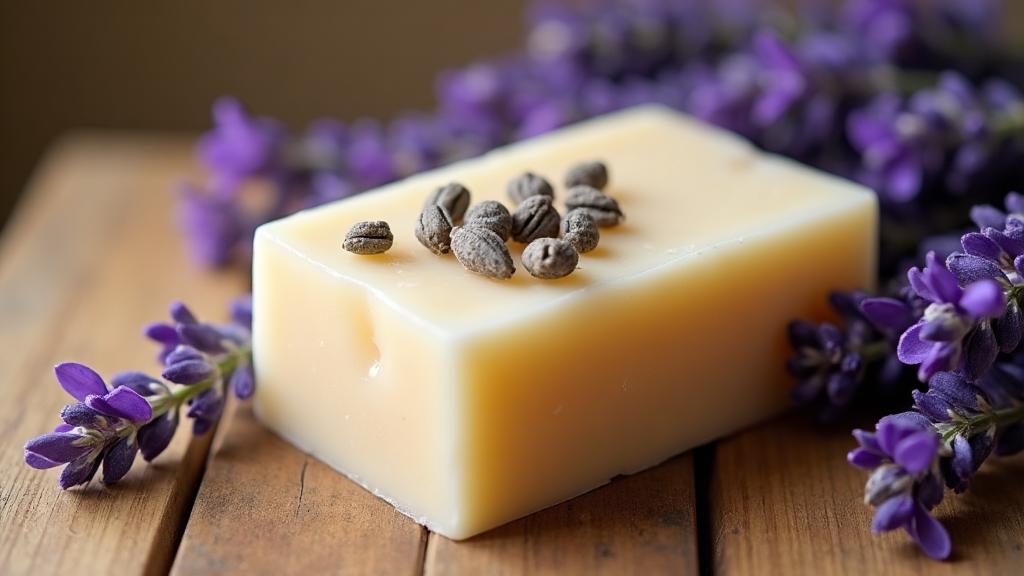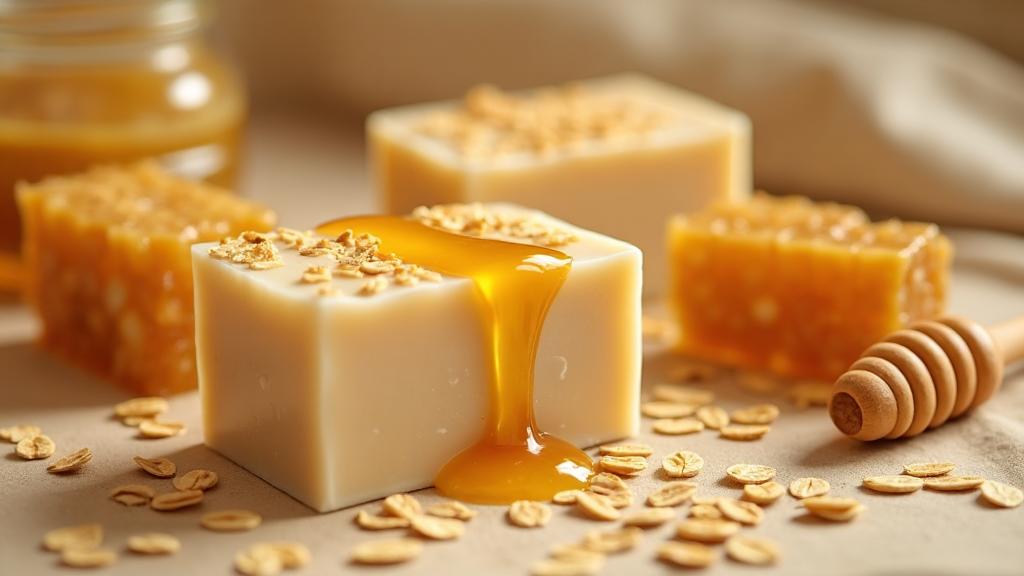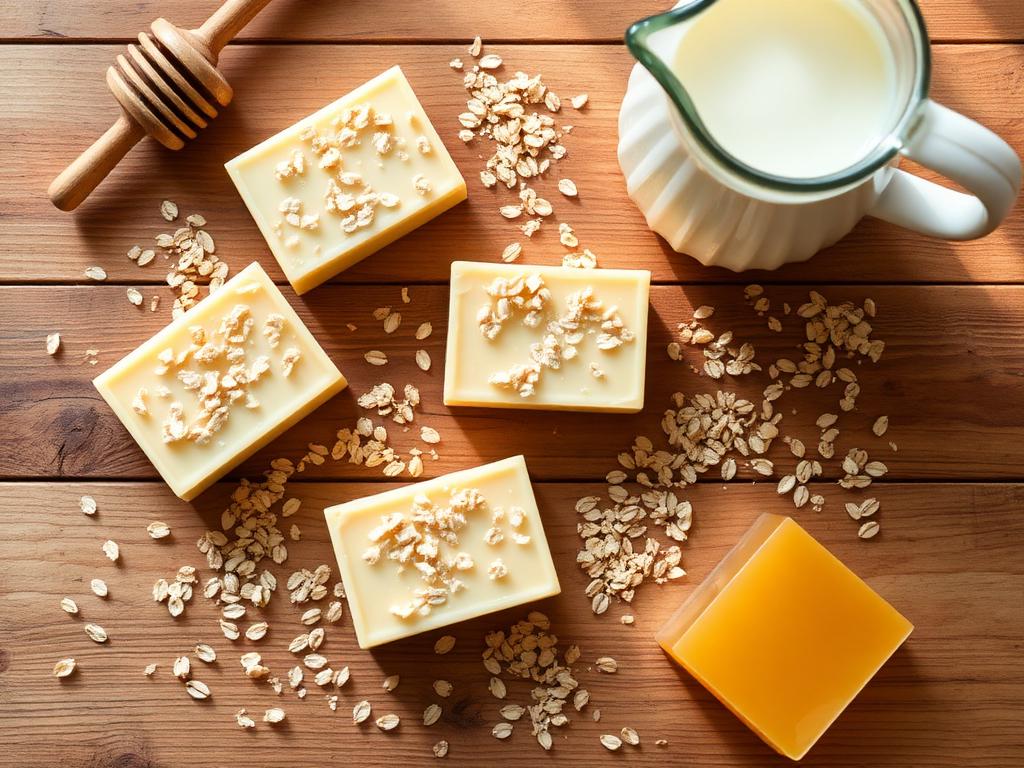
The first time I combined honey and oat milk in a soap recipe, I wasn't prepared for how universally beloved it would become. My grandmother had always told me that honey was nature's sweetest secret, and oatmeal had soothed more irritated skin than any pharmacy product. Combining them felt like creating a bridge between generations of folk wisdom and modern soapmaking.
I discovered this recipe during a particularly harsh winter when my skin was rebelling against everything. Commercial soaps left my hands feeling stripped and uncomfortable. On a whim, I melted down a simple goat milk base and stirred in a generous spoonful of raw honey from a local beekeeper. The transformation was immediate—the base became slightly golden, almost luminous.
What makes honey such a remarkable ingredient in soap goes beyond its sweet fragrance. Raw honey is naturally humectant, meaning it draws moisture from the air and holds it against your skin. When you wash with a honey-enriched soap, you're not just cleaning—you're creating a temporary moisture barrier that leaves skin feeling soft rather than tight.
The oat milk component came from experimenting with colloidal oatmeal, which is simply oats ground so fine they suspend in liquid rather than sinking. Ancient Romans knew about oatmeal's skin-soothing properties, and here we are, thousands of years later, still reaching for the same ingredient when our skin needs gentle care.
Creating this soap requires attention to temperature. Honey can scorch if the base is too hot, turning your beautiful golden soap into something with an unpleasant burnt sugar smell. I learned this the hard way during batch three, when impatience led me to add honey to nearly-boiling base. The entire batch smelled like caramel gone wrong.
The process itself has become meditative for me. Cutting the soap base into cubes, watching it melt into a smooth liquid, stirring in the honey and oatmeal with slow, deliberate motions. There's something deeply satisfying about creating something so useful and beautiful from simple ingredients.
A neighbor once asked why I bothered making soap when stores sold it for cheap. I handed her a bar of this honey oat milk soap and told her to use it for a week, then tell me the difference. A week later, she was at my door asking for the recipe.
Safety Warnings
- Never add honey to boiling soap base - wait until temperature drops
- Some people have honey allergies - patch test first
- Use food-grade colloidal oatmeal only
- Work in well-ventilated area
Tools Needed
- Microwave-safe glass measuring cup
- Silicone soap mold
- Digital thermometer
- Mixing spoon
- Kitchen scale
Ingredients
Step-by-Step Instructions
Melt Base
Cut base into cubes and melt in 30-second intervals. Cool to 130°F before adding honey.
Add Honey
Stir in raw honey gently until fully incorporated. Mixture will become slightly golden.
Add Oatmeal
Sprinkle colloidal oatmeal while stirring to prevent clumping.
Add Fragrance
Add vanilla essential oil if using. Stir gently.
Pour and Set
Pour into mold, spray with alcohol to remove bubbles. Allow 2-3 hours to harden.
🔧 Common Mistakes & Fixes
📦 Storage Tips
- Wrap in plastic to retain moisture
- Store in cool, dry place
- Use within 6 months for best fragrance
🔗 References & Further Reading
Independent sources for the chemistry and safety information on this page. We are not affiliated with any of them.
- 1.Glycerol (CID 753)(opens in a new tab)
PubChem, National Library of Medicine
Properties of glycerin, the humectant that makes melt & pour bases sweat in humid air.
- 2.Saponification(opens in a new tab)
Wikipedia
The chemical reaction behind every bar of real soap, with reaction equations and history.
- 3.Sodium Hydroxide (CID 14798)(opens in a new tab)
PubChem, National Library of Medicine
Full chemical and hazard profile for lye, including GHS classification and handling data.
- 4.Sodium Hydroxide Poisoning(opens in a new tab)
MedlinePlus, National Institutes of Health
Symptoms and emergency first-aid steps for lye exposure. Worth reading before you open the bottle.
- 5.Personal Protective Equipment — Overview(opens in a new tab)
U.S. Occupational Safety and Health Administration
What eye, hand, and skin protection actually protects against, and how to choose it.
- 6.Poison Help(opens in a new tab)
U.S. Health Resources and Services Administration
Poison control hotline and online help. Keep this reachable while you work.
- 7.Handcrafted Soap and Cosmetic Guild(opens in a new tab)
HSCG
Industry association for handcrafted soap makers, with labeling and regulatory guidance.
- 8.Safer Chemical Ingredients List(opens in a new tab)
U.S. Environmental Protection Agency
EPA-reviewed ingredients grouped by function, useful when substituting additives.