Every winter, my knees and elbows stage a rebellion. They become rough, dry, flaky patches that no amount of lotion seems to cure. The problem isn't lack of moisture—it's the buildup of dead skin cells that no cream can penetrate. The solution isn't more lotion. It's mechanical removal, otherwise known as scrubbing.
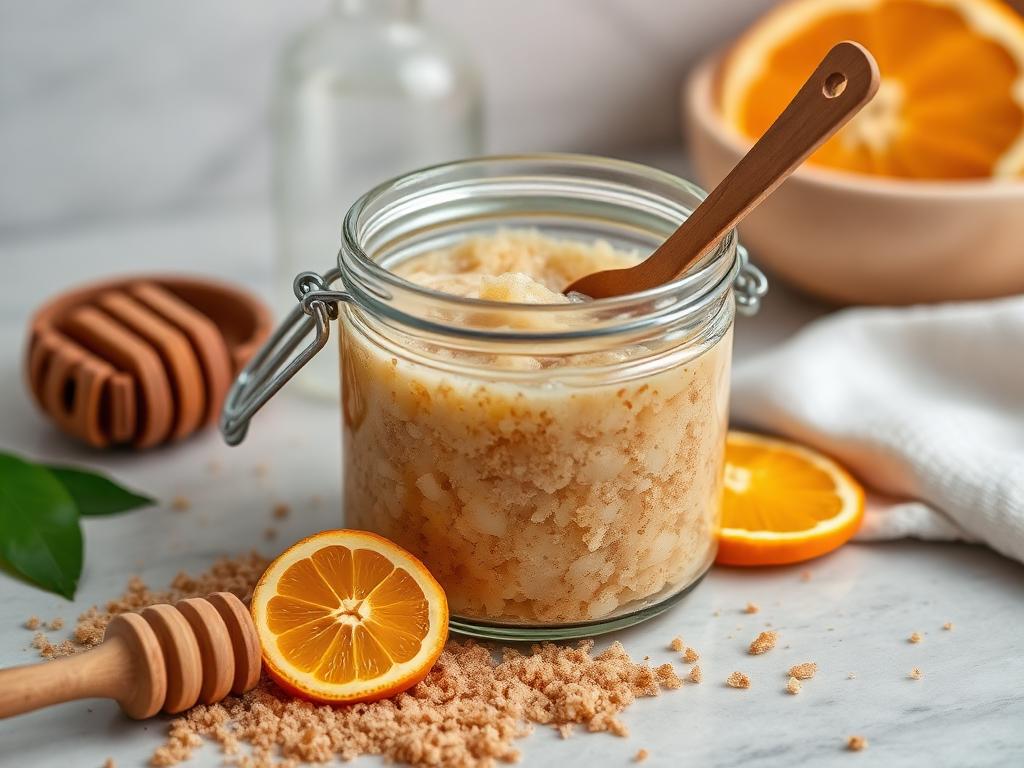
Sugar scrubs have become my seasonal weapon against winter skin. Unlike salt, which can sting and irritate, sugar dissolves in water and creates a gentler exfoliating experience. Brown sugar takes this gentleness further—its smaller, softer crystals won't abrade skin the way white sugar's sharper granules might. It's the difference between sandpaper and buffing cloth.
Adding honey transforms a basic scrub into something that feels genuinely luxurious. Raw honey brings natural humectant properties—it draws moisture from the air and helps skin retain it. The combination of exfoliation and hydration means you step out of the shower with smooth, soft skin rather than stripped, tight skin. It's a complete treatment in one jar.
The vanilla isn't strictly necessary, but I include it because few scents comfort like vanilla does. That warm, sweet fragrance triggers memories of baking, of home, of care. Using the scrub becomes not just a skincare routine but a small act of self-nurturing—a moment to slow down and tend to yourself in a world that rarely encourages such things.
This recipe makes a generous amount, enough to share or to keep in your shower for several weeks. I portion some into small jars as gifts, adding ribbon and simple labels. Recipients invariably ask for more, which tells me I'm onto something good.
Safety Warnings
- Use caution in tub/shower - oil makes surfaces slippery
- Do not use on broken or irritated skin
- Honey may crystallize - scrub texture will change
- Product contains no preservatives - use within 2-3 weeks
Tools Needed
- Mixing bowl
- Spoon or spatula
- Glass jar with lid
- Measuring cups and spoons
Ingredients
Step-by-Step Instructions
Combine Ingredients
Mix brown sugar and melted coconut oil in a bowl.
Add Honey and Vanilla
Stir in honey and vanilla until evenly distributed.
Transfer to Jar
Pack scrub into a clean glass jar with tight-fitting lid.
How to Use
Apply to damp skin, massage in circles, rinse thoroughly. Use 2-3 times per week.
🔧 Common Mistakes & Fixes
📦 Storage Tips
- Store in bathroom at room temperature
- Keep lid on to prevent moisture
- Use within 2-3 weeks (no preservatives)
- If mold appears, discard immediately
🔗 References & Further Reading
Independent sources for the chemistry and safety information on this page. We are not affiliated with any of them.
- 1.Essential Oil(opens in a new tab)
Wikipedia
Extraction methods, composition, and documented sensitization risks of essential oils.
- 2.Saponification(opens in a new tab)
Wikipedia
The chemical reaction behind every bar of real soap, with reaction equations and history.
- 3.Sodium Hydroxide (CID 14798)(opens in a new tab)
PubChem, National Library of Medicine
Full chemical and hazard profile for lye, including GHS classification and handling data.
- 4.Sodium Hydroxide Poisoning(opens in a new tab)
MedlinePlus, National Institutes of Health
Symptoms and emergency first-aid steps for lye exposure. Worth reading before you open the bottle.
- 5.Personal Protective Equipment — Overview(opens in a new tab)
U.S. Occupational Safety and Health Administration
What eye, hand, and skin protection actually protects against, and how to choose it.
- 6.Poison Help(opens in a new tab)
U.S. Health Resources and Services Administration
Poison control hotline and online help. Keep this reachable while you work.
- 7.Handcrafted Soap and Cosmetic Guild(opens in a new tab)
HSCG
Industry association for handcrafted soap makers, with labeling and regulatory guidance.
- 8.Safer Chemical Ingredients List(opens in a new tab)
U.S. Environmental Protection Agency
EPA-reviewed ingredients grouped by function, useful when substituting additives.