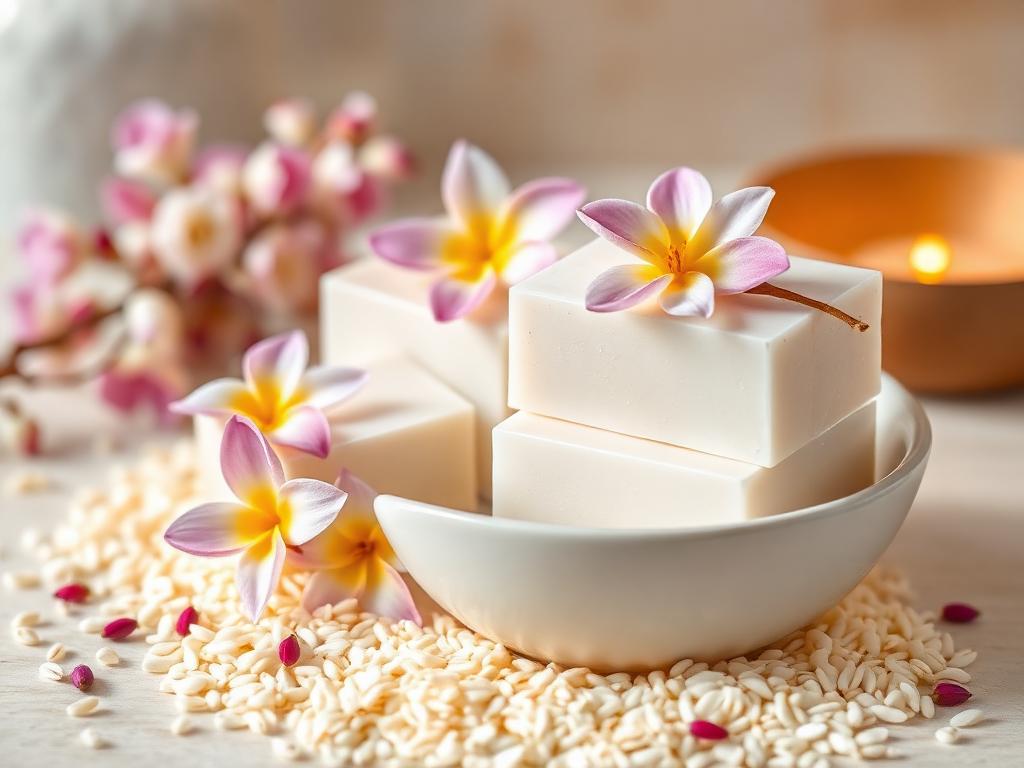
The concept for this soap came from watching my Korean neighbor's skincare routine. She saved the water from rinsing rice and used it to wash her face, claiming it was her mother's secret for beautiful skin. Curious, I researched and discovered that rice water has been used in Asian beauty rituals for centuries.
Rice water contains vitamins, minerals, and starches that leave skin feeling incredibly silky. The challenge was incorporating it into cold process soap, where the high pH environment can affect delicate ingredients. Through experimentation, I found that using rice water as the liquid portion of my lye solution—frozen first—preserved enough of its beneficial properties to make a difference.
The rice bran oil in this formula is no accident. It's pressed from the same grain that provides the water, creating a harmonious whole-grain approach. Rice bran oil is wonderfully conditioning and adds to the silky feel. Combined with the rice water, the result is a soap that glides across skin like nothing else I've made.
Jasmine absolute provides the fragrance, and it's worth every penny of its high price. True jasmine cannot be steam-distilled—the delicate flowers would be destroyed. Instead, the scent is extracted using solvents, creating an absolute rather than an essential oil. The fragrance is heady, intoxicating, unmistakably luxurious.
I make these bars small and precious, treating them as the special-occasion soap they deserve to be. The creamy white color with occasional rice grain specks looks elegant in simple packaging. Friends who receive them understand immediately that this is something out of the ordinary.
Using this soap feels like a ritual, not a routine. The jasmine unfolds in the steam, the silky lather coats the skin, and for a moment, a simple morning wash becomes something transcendent.
Safety Warnings
- Freeze rice water before adding lye
- Rice water lye solution may discolor - this is normal
- Jasmine absolute is expensive - measure carefully
- Standard cold process safety applies
Tools Needed
- Stainless steel pot
- Immersion blender
- Ice cube trays
- Digital thermometer
- Soap mold
- Safety gear
Ingredients
Step-by-Step Instructions
Prepare Rice Water
Rinse 1 cup rice in 2 cups water. Reserve milky water. Freeze into cubes.
Make Lye Solution
Add lye slowly to frozen rice water. Stir until dissolved. Will be yellowish.
Prepare Oils
Melt and combine oils. Cool to approximately 100°F.
Blend
Combine lye solution and oils. Blend to light trace.
Add Jasmine
Stir in jasmine absolute at trace. Pour into mold.
Cure
Unmold after 48 hours. Cure 4-6 weeks.
🔧 Common Mistakes & Fixes
📦 Storage Tips
- Cure 4-6 weeks for best results
- Jasmine scent develops and mellows during cure
- Store in cool, dry place
🔗 References & Further Reading
Independent sources for the chemistry and safety information on this page. We are not affiliated with any of them.
- 1.Soap Making Safety(opens in a new tab)
Handcrafted Soap and Cosmetic Guild
Workspace, storage, and handling practices specific to lye-based soap making.
- 2.Saponification(opens in a new tab)
Wikipedia
The chemical reaction behind every bar of real soap, with reaction equations and history.
- 3.Sodium Hydroxide (CID 14798)(opens in a new tab)
PubChem, National Library of Medicine
Full chemical and hazard profile for lye, including GHS classification and handling data.
- 4.Sodium Hydroxide Poisoning(opens in a new tab)
MedlinePlus, National Institutes of Health
Symptoms and emergency first-aid steps for lye exposure. Worth reading before you open the bottle.
- 5.Personal Protective Equipment — Overview(opens in a new tab)
U.S. Occupational Safety and Health Administration
What eye, hand, and skin protection actually protects against, and how to choose it.
- 6.Poison Help(opens in a new tab)
U.S. Health Resources and Services Administration
Poison control hotline and online help. Keep this reachable while you work.
- 7.Handcrafted Soap and Cosmetic Guild(opens in a new tab)
HSCG
Industry association for handcrafted soap makers, with labeling and regulatory guidance.
- 8.Safer Chemical Ingredients List(opens in a new tab)
U.S. Environmental Protection Agency
EPA-reviewed ingredients grouped by function, useful when substituting additives.