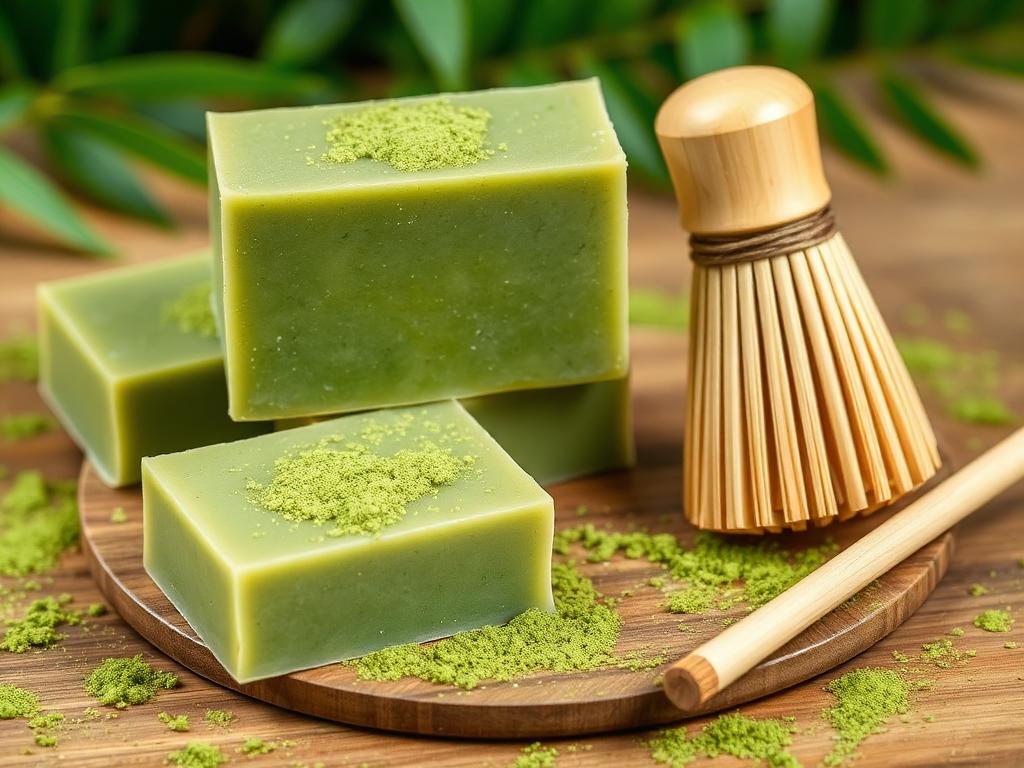
My introduction to matcha came through a Japanese friend who performed a traditional tea ceremony in her apartment. The reverence with which she whisked the vivid green powder, the focused attention to every gesture—it changed how I thought about simple rituals. I wanted to bring that mindfulness into my daily routine, and matcha soap became my answer.
The green of matcha is unlike any other natural colorant I've worked with. It's not the blue-green of spirulina or the yellow-green of herbs. It's a vivid, almost electric green that speaks of spring growth and renewal. When suspended in white soap base, it creates a color that makes me think of Japanese gardens shrouded in morning mist.
Finding the right matcha for soap required some experimentation. Culinary grade matcha, meant for baking, works well and costs less than ceremonial grade. The difference in color is minimal, and since the matcha isn't being consumed, the subtle flavor differences don't matter. I found a source that sells organic culinary matcha specifically for cosmetic use.
The process of making this soap has become its own small ceremony for me. I measure the matcha carefully, sift it to remove any lumps, mix it into a smooth paste before adding to the base. There's something meditative about these deliberate movements, each step building toward the final creation.
I gift these soaps to friends who need reminding to slow down. The green color catches their attention, and using the soap becomes a moment of pause in their rushed mornings. One friend told me she keeps a bar on her bathroom counter just to look at—it helps her remember to breathe.
That's what I love about this soap. Yes, it cleanses. But more importantly, it invites mindfulness into an everyday act.
Safety Warnings
- Matcha can stain surfaces - work on easy-to-clean area
- Store matcha properly to prevent oxidation
- Test for freshness - old matcha smells hay-like
- Green color may fade in direct sunlight
Tools Needed
- Small mixing bowl
- Fine mesh sifter
- Silicone molds
- Microwave-safe container
- Small whisk
Ingredients
Step-by-Step Instructions
Sift Matcha
Sift matcha powder into small bowl to remove any lumps.
Create Paste
Add 1 tablespoon melted base to matcha. Whisk until smooth paste forms.
Melt Remaining Base
Melt remaining base and cool to 130°F.
Combine
Add matcha paste to base, stirring thoroughly. Add essential oil if using.
Pour and Set
Pour into molds, spray with alcohol. Allow 2 hours to harden.
🔧 Common Mistakes & Fixes
📦 Storage Tips
- Wrap in opaque paper to protect from light
- Use within 3 months for best color
- Natural colors will mellow over time
🔗 References & Further Reading
Independent sources for the chemistry and safety information on this page. We are not affiliated with any of them.
- 1.Glycerol (CID 753)(opens in a new tab)
PubChem, National Library of Medicine
Properties of glycerin, the humectant that makes melt & pour bases sweat in humid air.
- 2.Saponification(opens in a new tab)
Wikipedia
The chemical reaction behind every bar of real soap, with reaction equations and history.
- 3.Sodium Hydroxide (CID 14798)(opens in a new tab)
PubChem, National Library of Medicine
Full chemical and hazard profile for lye, including GHS classification and handling data.
- 4.Sodium Hydroxide Poisoning(opens in a new tab)
MedlinePlus, National Institutes of Health
Symptoms and emergency first-aid steps for lye exposure. Worth reading before you open the bottle.
- 5.Personal Protective Equipment — Overview(opens in a new tab)
U.S. Occupational Safety and Health Administration
What eye, hand, and skin protection actually protects against, and how to choose it.
- 6.Poison Help(opens in a new tab)
U.S. Health Resources and Services Administration
Poison control hotline and online help. Keep this reachable while you work.
- 7.Handcrafted Soap and Cosmetic Guild(opens in a new tab)
HSCG
Industry association for handcrafted soap makers, with labeling and regulatory guidance.
- 8.Safer Chemical Ingredients List(opens in a new tab)
U.S. Environmental Protection Agency
EPA-reviewed ingredients grouped by function, useful when substituting additives.