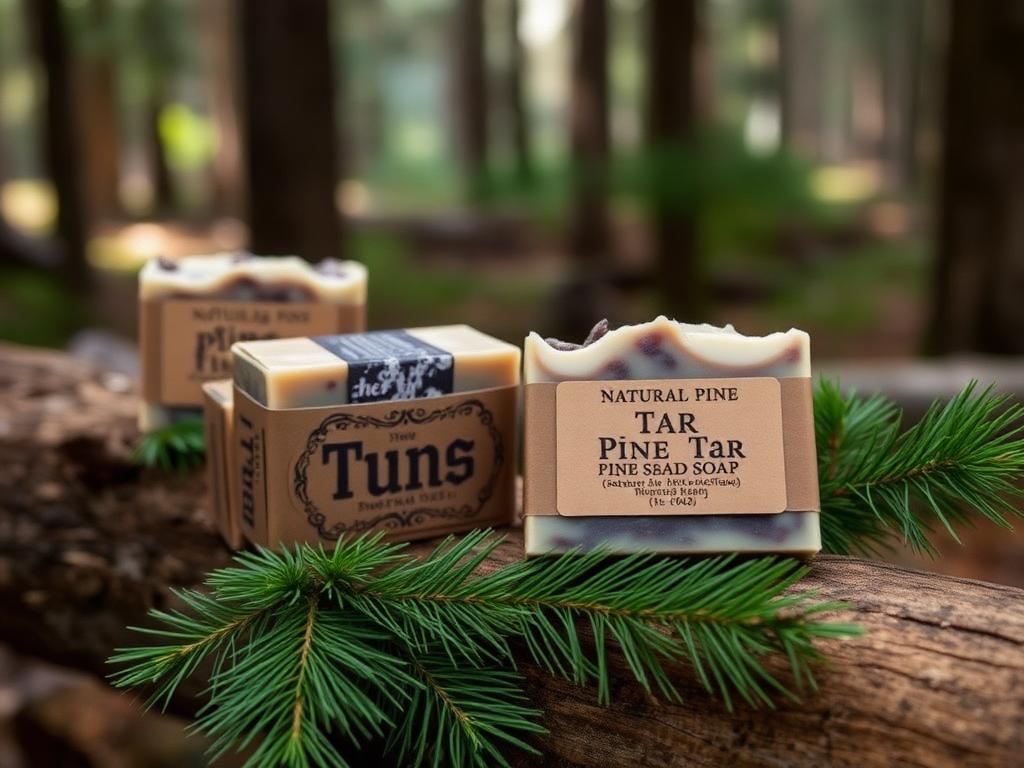
Pine tar soap connects me to generations of my ancestors who worked in Northern forests. My great-grandfather was a lumberjack who swore by pine tar soap for keeping himself clean in the woods. He said the forest gave them everything they needed, including the means to wash away the workday.
Genuine pine tar is made by slowly burning pine wood in the absence of oxygen, collecting the thick, dark liquid that emerges. This ancient process produces a substance that has been used for centuries as a wood preservative, rope treatment, and yes—soap ingredient. The first time I opened a can of real pine tar, I was transported to a primordial forest.
Working with pine tar is not for the faint of heart. It's thick and sticky, refuses to mix easily, and smells intensely of campfire and evergreen. My first attempt created a swirled mess that looked like someone had poured molasses into soap batter. Beautiful in its own chaotic way, but not what I intended.
The trick I discovered is to warm the pine tar slightly and mix it with a small portion of the oils first, creating a pine tar concentrate that incorporates more smoothly. This simple technique transformed my results from accidental art to intentional creation.
Pine tar accelerates trace significantly, so you must work quickly. There's no time for elaborate designs—this is a get-it-in-the-mold situation. The bars emerge dark brown, almost black, with that distinctive smell that either delights or repels people. There seems to be no middle ground.
I gift this soap to hunters, hikers, and anyone who spends time in the woods. They report feeling like the soap belongs in the forest, a natural extension of their outdoor experience. One friend keeps a bar in his tackle box, another in his deer blind. The connection to nature that pine tar provides goes beyond mere cleaning.
Safety Warnings
- Pine tar is messy and stains everything - wear old clothes
- Use only cosmetic-grade pine tar, not industrial
- Work in extremely well-ventilated area
- Pine tar accelerates trace - work fast
- Some people are sensitive to pine products
Tools Needed
- Dedicated pot (pine tar stains)
- Immersion blender
- Safety gear
- Heat-resistant containers
- Wooden or silicone mold
- Digital scale
Ingredients
Step-by-Step Instructions
Prepare Pine Tar Mixture
Warm pine tar and mix with 2 oz olive oil until smooth.
Make Lye Solution
Add lye to water. Cool to approximately 100°F.
Combine Remaining Oils
Melt and combine remaining oils. Add pine tar mixture. Blend until uniform.
Add Lye Solution
Add lye solution and blend. Trace comes quickly - be ready.
Pour Immediately
Add cedarwood if using and pour immediately into mold.
Extended Cure
Unmold after 72 hours. Cure minimum 8 weeks.
🔧 Common Mistakes & Fixes
📦 Storage Tips
- Allow extended cure for best results
- Scent mellows over time
- Store in well-ventilated area
🔗 References & Further Reading
Independent sources for the chemistry and safety information on this page. We are not affiliated with any of them.
- 1.Soap Making Safety(opens in a new tab)
Handcrafted Soap and Cosmetic Guild
Workspace, storage, and handling practices specific to lye-based soap making.
- 2.Saponification(opens in a new tab)
Wikipedia
The chemical reaction behind every bar of real soap, with reaction equations and history.
- 3.Sodium Hydroxide (CID 14798)(opens in a new tab)
PubChem, National Library of Medicine
Full chemical and hazard profile for lye, including GHS classification and handling data.
- 4.Sodium Hydroxide Poisoning(opens in a new tab)
MedlinePlus, National Institutes of Health
Symptoms and emergency first-aid steps for lye exposure. Worth reading before you open the bottle.
- 5.Personal Protective Equipment — Overview(opens in a new tab)
U.S. Occupational Safety and Health Administration
What eye, hand, and skin protection actually protects against, and how to choose it.
- 6.Poison Help(opens in a new tab)
U.S. Health Resources and Services Administration
Poison control hotline and online help. Keep this reachable while you work.
- 7.Handcrafted Soap and Cosmetic Guild(opens in a new tab)
HSCG
Industry association for handcrafted soap makers, with labeling and regulatory guidance.
- 8.Safer Chemical Ingredients List(opens in a new tab)
U.S. Environmental Protection Agency
EPA-reviewed ingredients grouped by function, useful when substituting additives.