The concept of wine soap came from a dinner party where a guest spilled red wine across my white tablecloth. As I scrubbed at the stain, I wondered about all those antioxidants going into the fabric instead of my skin. What if I could capture wine's properties in a gentler form?
Wine in soap is even trickier than beer. The alcohol must be removed, the sugars can cause overheating, and the beautiful burgundy color often turns muddy brown when it meets lye. My first ten attempts were varying shades of disappointment—brown bars that smelled vaguely of grape and failed chemistry.
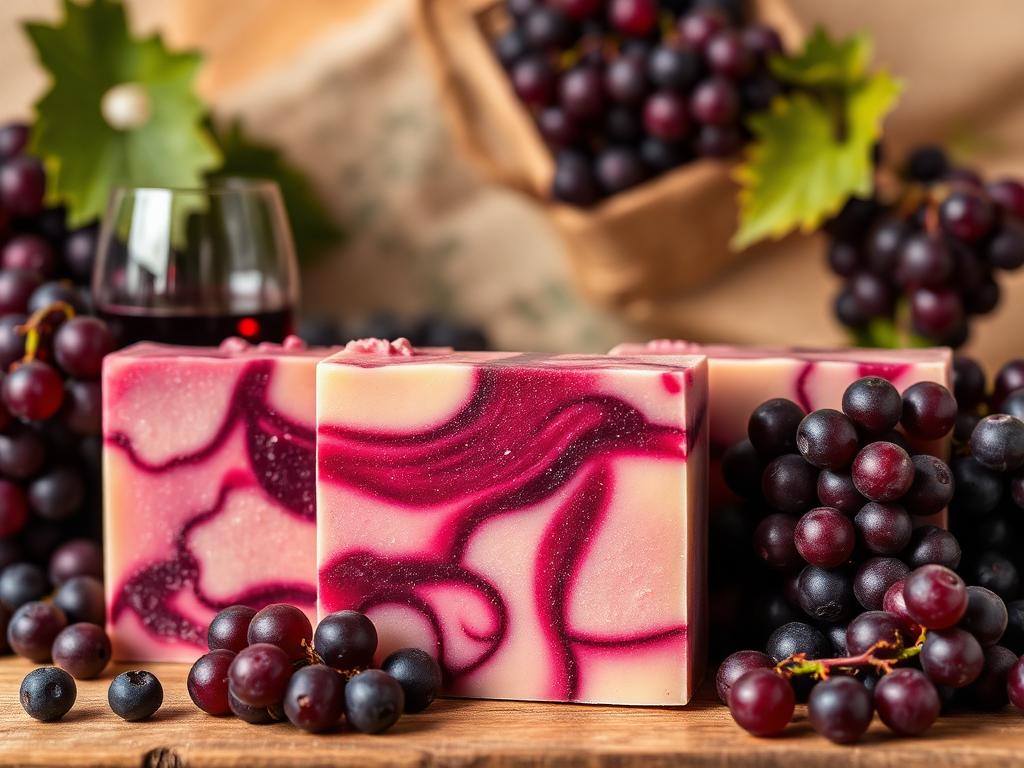
The breakthrough came from treating the wine like a fragile ingredient rather than a robust one. I reduced the wine by simmering to concentrate it and remove alcohol, froze the concentrate to protect it from the lye's heat, and added clay to help stabilize the color. The result was finally worthy of the ingredient.
Rose geranium essential oil complements wine beautifully—floral, slightly fruity, sophisticated. Together they create a fragrance profile that feels like a garden party at a vineyard. The scent evolves as you use the soap, different notes emerging as the bar warms.
I package these soaps with a simple grape leaf stamped on top, nestled in purple tissue paper. They're popular as hostess gifts, bringing a touch of vineyard elegance to someone's guest bathroom. The deep burgundy color makes them stand out among beige commercial offerings.
Using wine soap feels indulgent in the best way—like you're worth the extra effort, deserving of something beyond ordinary. That's the real gift of handmade soap. It reminds us that small luxuries matter.
Safety Warnings
- Wine must be simmered to remove alcohol before use
- Freeze reduced wine before adding lye
- Wine lye solution may bubble and change color dramatically
- Monitor temperature - sugars can cause overheating
Tools Needed
- Saucepan for reducing wine
- Ice cube trays
- Stainless steel soap pot
- Immersion blender
- Thermometer
- Safety gear
Ingredients
Step-by-Step Instructions
Reduce Wine
Simmer 16 oz wine until reduced to 8 oz. Cool completely, then freeze.
Make Lye Solution
Add lye to frozen wine slowly. Will turn dark green then purple. Cool to 100°F.
Prepare Oils
Melt oils and stir in rose clay. Cool to match lye temperature.
Combine and Blend
Add lye solution to oils. Blend to light trace.
Add Essential Oil
Stir in rose geranium. Pour into mold.
Cool Cure
Do not insulate. Allow to cool slowly to prevent overheating. Cure 6 weeks.
🔧 Common Mistakes & Fixes
📦 Storage Tips
- Cure 6 weeks minimum
- Color deepens during cure
- Store away from light
🔗 References & Further Reading
Independent sources for the chemistry and safety information on this page. We are not affiliated with any of them.
- 1.Soap Making Safety(opens in a new tab)
Handcrafted Soap and Cosmetic Guild
Workspace, storage, and handling practices specific to lye-based soap making.
- 2.Saponification(opens in a new tab)
Wikipedia
The chemical reaction behind every bar of real soap, with reaction equations and history.
- 3.Sodium Hydroxide (CID 14798)(opens in a new tab)
PubChem, National Library of Medicine
Full chemical and hazard profile for lye, including GHS classification and handling data.
- 4.Sodium Hydroxide Poisoning(opens in a new tab)
MedlinePlus, National Institutes of Health
Symptoms and emergency first-aid steps for lye exposure. Worth reading before you open the bottle.
- 5.Personal Protective Equipment — Overview(opens in a new tab)
U.S. Occupational Safety and Health Administration
What eye, hand, and skin protection actually protects against, and how to choose it.
- 6.Poison Help(opens in a new tab)
U.S. Health Resources and Services Administration
Poison control hotline and online help. Keep this reachable while you work.
- 7.Handcrafted Soap and Cosmetic Guild(opens in a new tab)
HSCG
Industry association for handcrafted soap makers, with labeling and regulatory guidance.
- 8.Safer Chemical Ingredients List(opens in a new tab)
U.S. Environmental Protection Agency
EPA-reviewed ingredients grouped by function, useful when substituting additives.