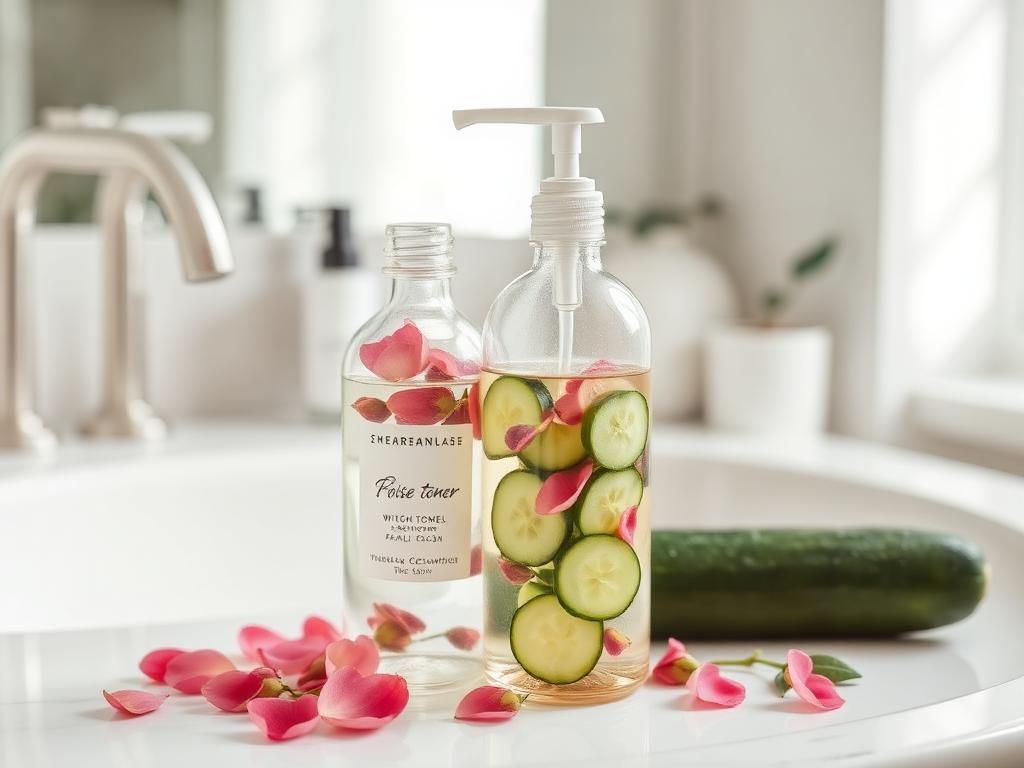
I discovered rose water during a trip to Morocco, where it's used for everything from cooking to skincare to hospitality. A vendor spritzed my hands with rose water as I entered his shop, and the delicate fragrance stopped me in my tracks. I bought three bottles and came home determined to incorporate this beautiful ingredient into my skincare routine.
Toner is one of those products I never understood until I started making my own. Commercial toners often contain alcohol that strips skin, followed by ingredients meant to replace what the alcohol removed. It seemed counterproductive. My homemade version takes a gentler approach: balance and hydrate without stripping.
Witch hazel provides mild astringent properties without the harshness of alcohol. It's been used for centuries as a botanical remedy, and unlike many traditional ingredients, it's actually been studied and shown to have real effects. I source mine from a company that uses a gentle extraction process, preserving the plant's beneficial compounds.
Vegetable glycerin acts as a humectant, drawing moisture from the air and holding it against your skin. In dry climates, this can be counterproductive—the glycerin might pull moisture from your skin instead. I adjust my formula seasonally, using more glycerin in humid summer months and less in dry winter.
The rose essential oil is optional but transformative. Just a few drops amplify the rose water's natural fragrance and contribute their own skin-loving properties. The ritual of spritzing rose toner on my face each morning has become a moment of daily beauty, a small gift to myself before facing the world.
Friends who try this toner often comment on how it feels—like nothing and everything at once. It doesn't sting, doesn't dry, just leaves skin feeling refreshed and ready for whatever comes next.
Safety Warnings
- Patch test before facial use
- Ensure rose water is cosmetic grade, not flavoring
- Keep away from eyes
- Use within 2 weeks if preservative-free
Tools Needed
- Spray bottle (glass preferred)
- Small funnel
- Measuring cups and spoons
- Label
Ingredients
Step-by-Step Instructions
Combine Liquids
Pour rose water and witch hazel into spray bottle.
Add Glycerin
Add vegetable glycerin and shake well.
Add Essential Oil
Add rose essential oil if using. Shake again.
Label and Store
Label with date and ingredients. Store in cool place.
🔧 Common Mistakes & Fixes
📦 Storage Tips
- Refrigerate for longest shelf life
- Use within 2 weeks without preservative
- Shake before each use
🔗 References & Further Reading
Independent sources for the chemistry and safety information on this page. We are not affiliated with any of them.
- 1.Essential Oil(opens in a new tab)
Wikipedia
Extraction methods, composition, and documented sensitization risks of essential oils.
- 2.Saponification(opens in a new tab)
Wikipedia
The chemical reaction behind every bar of real soap, with reaction equations and history.
- 3.Sodium Hydroxide (CID 14798)(opens in a new tab)
PubChem, National Library of Medicine
Full chemical and hazard profile for lye, including GHS classification and handling data.
- 4.Sodium Hydroxide Poisoning(opens in a new tab)
MedlinePlus, National Institutes of Health
Symptoms and emergency first-aid steps for lye exposure. Worth reading before you open the bottle.
- 5.Personal Protective Equipment — Overview(opens in a new tab)
U.S. Occupational Safety and Health Administration
What eye, hand, and skin protection actually protects against, and how to choose it.
- 6.Poison Help(opens in a new tab)
U.S. Health Resources and Services Administration
Poison control hotline and online help. Keep this reachable while you work.
- 7.Handcrafted Soap and Cosmetic Guild(opens in a new tab)
HSCG
Industry association for handcrafted soap makers, with labeling and regulatory guidance.
- 8.Safer Chemical Ingredients List(opens in a new tab)
U.S. Environmental Protection Agency
EPA-reviewed ingredients grouped by function, useful when substituting additives.