My kitchen pantry has become an extension of my soap workshop. Where once I saw only cooking ingredients, I now see potential colorants, additives, and artistic possibilities. Nowhere is this more apparent than with turmeric—that vibrant orange-yellow spice that stains everything it touches with cheerful permanence.
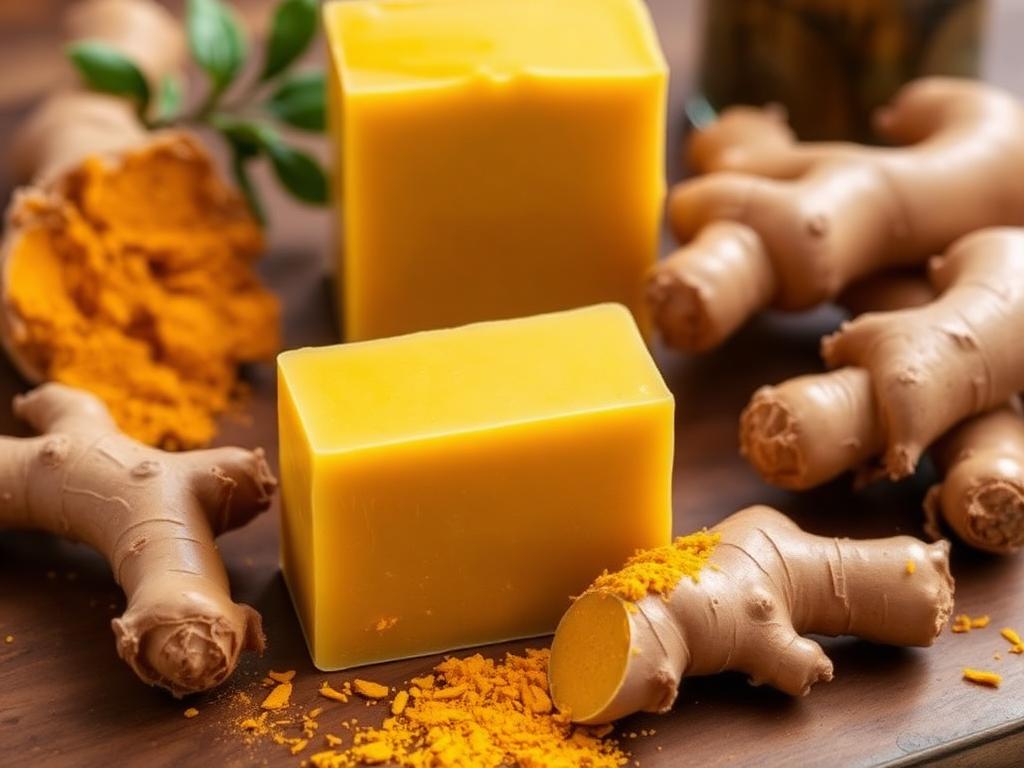
Turmeric's enthusiasm for staining is both blessing and curse in soap making. On one hand, it provides a beautiful golden color that synthetic dyes struggle to match. On the other hand, it will turn your silicone molds, your wooden spoons, your kitchen towels, and possibly your ceiling a shade of mustard yellow if you're not careful. I speak from colorful experience.
The pairing with ginger makes aromatic sense. Both spices share warm, earthy notes that complement each other the way they do in curry powder or chai tea. Ginger essential oil provides the scent—fresh, spicy, subtly sweet—while turmeric handles the visual impact. Together they create soap that smells like something delicious and looks like captured sunshine.
Working with turmeric requires acceptance that you will be stained. Wear old clothes or an apron. Cover your work surface with newspaper or plastic. Consider the first pair of gloves sacrificial—they'll be yellow forever. These precautions may seem excessive until you've experienced the tenacity of curcumin, the compound responsible for turmeric's color.
The golden color actually deepens during the cure period, which makes turmeric one of the few natural colorants that improves with time in cold process soap. Fresh bars appear pale yellow; after six weeks, they've developed into rich, warm gold. Patience rewards you with more beautiful soap—a theme that repeats throughout cold process craft.
Safety Warnings
- Turmeric stains everything - wear old clothes and cover surfaces
- Standard cold process safety gear required
- Ginger essential oil may sensitize skin - test on small area
- Work in well-ventilated area for essential oil scent
Tools Needed
- Safety goggles and chemical-resistant gloves (disposable)
- Digital scale
- Stick blender
- Thermometer
- Silicone mold (may become stained)
- Newspaper or plastic to cover surfaces
Ingredients
Step-by-Step Instructions
Prepare Workspace
Cover all surfaces with newspaper or plastic. Wear old clothes.
Make Lye Solution
Add lye to water carefully. Cool to 100°F.
Prepare Turmeric
Mix turmeric with 2 tablespoons of olive oil from recipe to create a smooth paste.
Combine and Color
Blend oils and lye to light trace. Add turmeric paste and ginger oil. Blend to medium trace.
Pour and Cure
Pour into mold, insulate. Unmold after 48 hours, cure 4-6 weeks.
🔧 Common Mistakes & Fixes
📦 Storage Tips
- Color deepens with cure time
- Store away from light to preserve color
- Turmeric may temporarily stain washcloths
Real DIYer Story
"I measured turmeric over my kitchen counter without protection. Three months later, I still have a yellow ring on my white laminate. My wife was not pleased."
— Patrick M.
🔗 References & Further Reading
Independent sources for the chemistry and safety information on this page. We are not affiliated with any of them.
- 1.Soap Making Safety(opens in a new tab)
Handcrafted Soap and Cosmetic Guild
Workspace, storage, and handling practices specific to lye-based soap making.
- 2.Saponification(opens in a new tab)
Wikipedia
The chemical reaction behind every bar of real soap, with reaction equations and history.
- 3.Sodium Hydroxide (CID 14798)(opens in a new tab)
PubChem, National Library of Medicine
Full chemical and hazard profile for lye, including GHS classification and handling data.
- 4.Sodium Hydroxide Poisoning(opens in a new tab)
MedlinePlus, National Institutes of Health
Symptoms and emergency first-aid steps for lye exposure. Worth reading before you open the bottle.
- 5.Personal Protective Equipment — Overview(opens in a new tab)
U.S. Occupational Safety and Health Administration
What eye, hand, and skin protection actually protects against, and how to choose it.
- 6.Poison Help(opens in a new tab)
U.S. Health Resources and Services Administration
Poison control hotline and online help. Keep this reachable while you work.
- 7.Handcrafted Soap and Cosmetic Guild(opens in a new tab)
HSCG
Industry association for handcrafted soap makers, with labeling and regulatory guidance.
- 8.Safer Chemical Ingredients List(opens in a new tab)
U.S. Environmental Protection Agency
EPA-reviewed ingredients grouped by function, useful when substituting additives.